Last updated: September 26, 2026. We buy most of what we review; when a brand sends something, we say so — and it never changes our verdict. If you buy through our links, we may earn a commission at no cost to you. How we test
We might earn a commission if you make a purchase, at no additional cost to you.
TL;DR — Just Tell Me What to Buy
Ride1Up wins on performance and value for serious riders. Rad Power is better for casual commuters who want simplicity and a bigger support network. Either way, both brands deliver far more than their price tags suggest.
The two biggest names in affordable e-bikes go head-to-head. We’ve tested both extensively — here’s which brand wins for different riders.
We might earn a commission if you make a purchase, at no additional cost to you.
The Brands at a Glance
Ride1Up
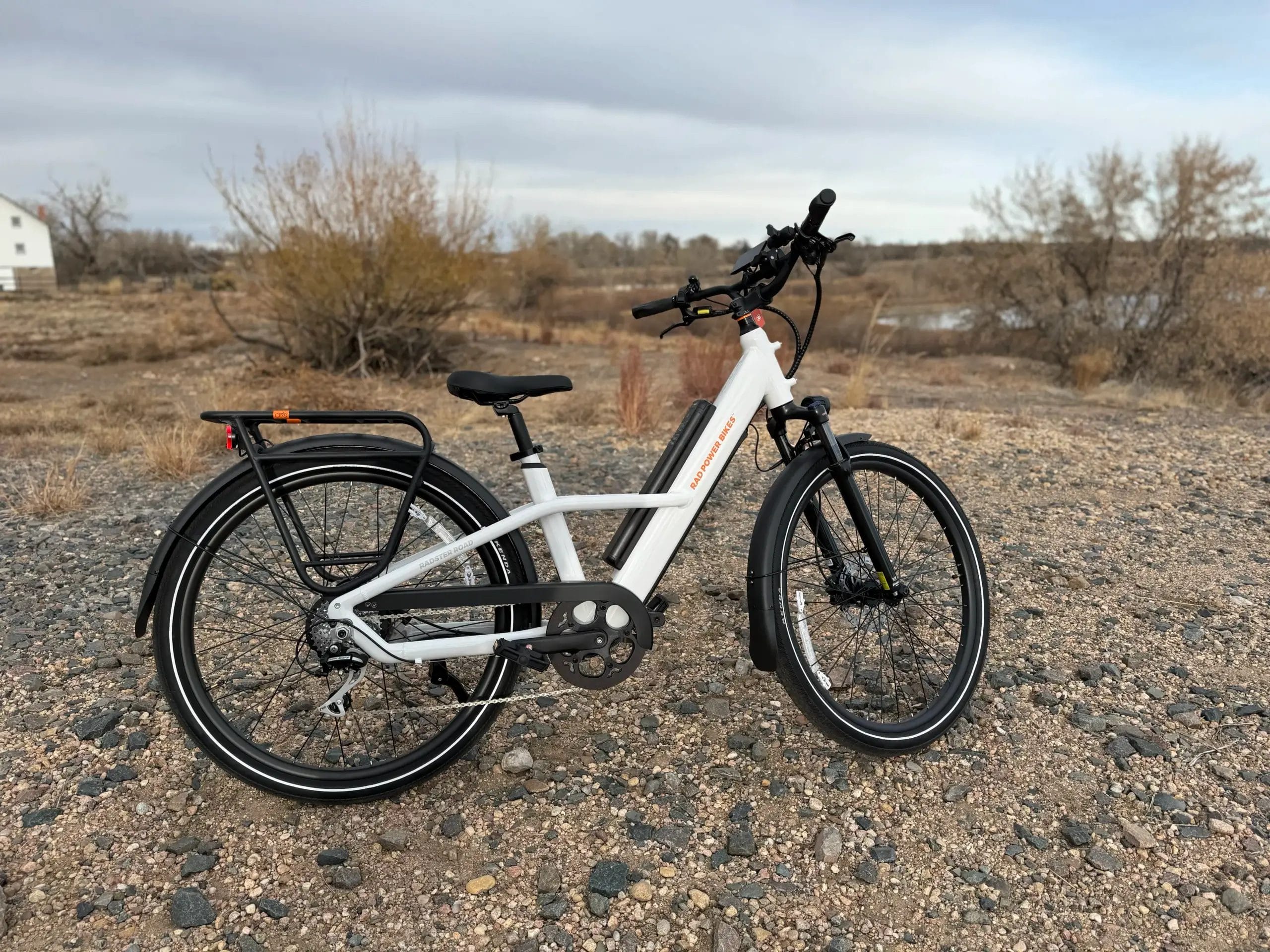
Rad Power Bikes
Price Range
$1,095-$3,795
$1,199-$2,499
Bikes Sold
Growing rapidly
450,000+ since 2007
Philosophy
Best specs per dollar
Best ownership experience
Where to Buy
Direct online only
Online + Guideshops + mobile service
Speed Class
Class 3 (28 mph) most models
Class 2 (20 mph) most models
Best For
Performance-focused commuters
Families, cargo, utility
Ride1Up: Performance Per Dollar
Ride1Up’s mission: “Get more people on e-bikes by making them accessible to everyone, not just the wealthy.”
They accomplish this by selling direct-to-consumer only, cutting retail markup, and passing savings to buyers. The result? Bikes with specs that embarrass competitors at the same price.
What Makes Ride1Up Different
Class 3 speeds standard — 28 mph on most models (vs. Rad’s 20 mph)
Lighter bikes — Typically 49-55 lbs vs. 65-73 lbs for Rad
Premium mid-drives available — German Brose motors on Prodigy v2 and TrailRush
FSA/HSA eligible — Several models qualify for health accounts
Carbon fiber option — CF Racer1 for serious performance
Ride1Up’s 2026 Categories
All-arounders — Vorsa ($1,395), the do-everything commuter
Folders — Portola ($1,095), compact 20″ wheels
Lightweights — Roadster v3, road-style with belt drive option
Premium mid-drives — Prodigy v2, TrailRush with Brose motors
Rad Power Bikes has sold over 450,000 e-bikes since 2007, making them the largest e-bike company in North America. That scale translates to something no competitor can match: a support network that actually helps.
“Rad Power Bikes simply has the best support in the e-bike industry. You can talk to a US-based person on the phone, and they’re actually helpful. We can’t overstate how rare this is.”
What Makes Rad Power Different
Guideshops — Physical stores for test rides and service
Mobile service — Rad’s own vans plus Velofix partnerships
Utility-first design — Purpose-built for cargo, hauling, families
Ride1Up: Most bikes are Class 3 (28 mph pedal assist). This matters for commuting — keeping pace with traffic is safer and faster.
Rad Power: Most models are Class 2 (20 mph max). For many riders, 20 mph is plenty. And Class 2 bikes are legal almost everywhere — no restrictions on trails or bike paths.
Winner: Ride1Up if speed matters. Rad Power if you want maximum access.
Support Network
Ride1Up: Phone and email support with “seasoned bike mechanics that are super friendly.” Good service, but you’re handling issues yourself or finding a local shop.
Rad Power: The industry’s best support network:
Physical Guideshops for test rides and service
Mobile service units
Velofix partnership for in-home repairs
Certified local bike shop network
US-based phone support with real humans
Winner: Rad Power, decisively. This is worth a price premium for many buyers.
Use Case
Ride1Up: Built for individual riders who want performance. Great commuters, solid trail bikes, premium options for enthusiasts.
Rad Power: Built for utility. RadRunner for customizable hauling. RadWagon for cargo and kids. Purpose-built designs that competitors don’t match.
Winner: Rad Power for families and cargo. Ride1Up for individual performance.
Who Should Buy Which
Buy Ride1Up If:
Budget is your primary concern — more specs per dollar
You want Class 3 speed (28 mph)
Weight matters — lighter bikes for apartments/racks
You’re comfortable with basic maintenance
You want a premium mid-drive without premium prices
You don’t need cargo/utility features
Buy Rad Power Bikes If:
Support and service matter most
You want to test ride at a physical store
You need cargo capability (hauling kids, groceries, gear)
You prefer a proven brand with 450K+ bikes on the road
You’re nervous about maintaining an e-bike
You want the RadRunner/RadWagon utility designs
Honest Negatives
Ride1Up Cons:
No physical stores — Can’t test ride before buying
Limited local support — Phone/email only
Some models barebones — May need to add fenders/rack ($50-110)
Newer brand — Less proven than Rad’s 450K+ track record
Rad Power Bikes Cons:
Heavier bikes — 65-73 lbs makes handling harder
Class 2 speed limit — 20 mph max may frustrate faster riders
Cadence sensors — Less natural feel than torque sensors
No mid-drive motors — All rear hub motors
Shipping delays reported — Don’t plan around their estimates
FAQ
Which is better for commuting? Ride1Up, primarily for Class 3 speed (28 mph). Keeping pace with traffic is safer.
Which has better resale value? Rad Power, due to greater brand recognition and larger user base.
Can I test ride before buying? Rad Power: Yes, at Guideshops. Ride1Up: No, online only.
Which is lighter? Ride1Up at 49-55 lbs is significantly lighter than Rad Power (65-73 lbs).
Which is better for families? Rad Power. The RadRunner and RadWagon are purpose-built for hauling kids and cargo.
Final Verdict
For pure value:Ride1Up delivers more bike for less money. Lighter, faster, and packed with features that competitors can’t match at the price.
We might earn a commission if you make a purchase, at no additional cost to you.
For peace of mind:Rad Power Bikes wins on the ownership experience. When something goes wrong, you can talk to real humans, visit physical stores, and get mobile service at your door.
For most suburban families, we’d go with Ride1Up and put the savings toward accessories. But if something breaks and you want to call someone who will actually help? Rad Power every time.
Both brands have their strengths. Ride1Up tends to excel in certain areas while Rad Power has advantages in others. Check our detailed comparison above for a breakdown by category — we tested both extensively before picking a winner.
Is Ride1Up worth the price?
It depends on what you prioritize. Ride1Up delivers solid quality for the price point, but Rad Power may offer better value in some categories. We break down the cost-per-wear math in our full comparison above.
What do people on Reddit say about Ride1Up vs Rad Power?
Reddit users are split — some swear by Ride1Up for durability and quality, while others prefer Rad Power for comfort or value. The consensus? Both are legit brands, and the “better” choice depends on your specific needs. We’ve read hundreds of threads so you don’t have to.
Can you return Ride1Up if you don’t like them?
Most brands in this space offer 30-day return policies, though some are more generous than others. Always check the current return policy on their website before ordering. We recommend trying both if you’re on the fence — return whichever doesn’t work for you.
Are there cheaper alternatives to Ride1Up and Rad Power?
Yes! We’ve reviewed dozens of alternatives across different price points. Check our related comparisons below for budget-friendly options that don’t sacrifice quality.


 Radster Road electric bike” class=”wp-image-28388″ srcset=”https://emg4897m6z5.exactdn.com/wp-content/uploads/2025/02/radster-road-review-18-scaled.webp 2560w, https://emg4897m6z5.exactdn.com/wp-content/uploads/2026/02/radster-road-review-18-600×450.webp 600w, https://emg4897m6z5.exactdn.com/wp-content/uploads/2026/02/radster-road-review-18-768×576.webp 768w, https://emg4897m6z5.exactdn.com/wp-content/uploads/2026/02/radster-road-review-18-2048×1536.webp 2048w, https://emg4897m6z5.exactdn.com/wp-content/uploads/2026/02/radster-road-review-18-1536×1152.webp 1536w, https://emg4897m6z5.exactdn.com/wp-content/uploads/2025/02/radster-road-review-18-scaled.webp?w=512 512w, https://emg4897m6z5.exactdn.com/wp-content/uploads/2025/02/radster-road-review-18-scaled.webp?w=1024 1024w, https://emg4897m6z5.exactdn.com/wp-content/uploads/2025/02/radster-road-review-18-scaled.webp?w=450 450w” sizes=”(max-width: 1200px) 100vw, 1200px” />


