
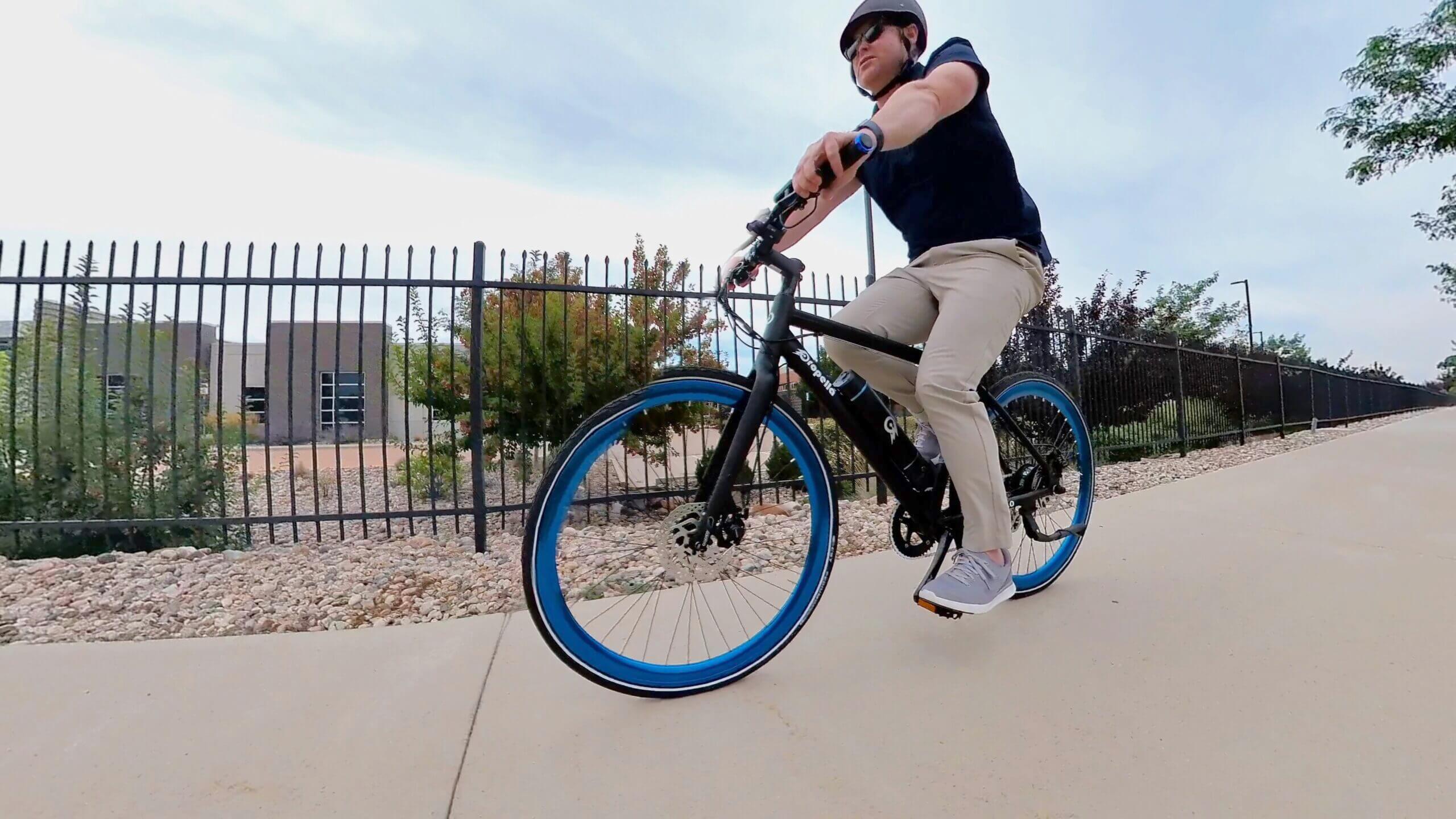


We’ve been testing electric bikes at We Tried It for over three years. We’ve ridden fat-tire beasts through snow, commuter bikes through city traffic, folding bikes onto trains, and cargo bikes loaded with groceries and kids. Over 110 different e-bikes. Thousands of miles.
So when someone asks “are e-bikes worth it?” – we have opinions.
The short answer: Yes, for most people, an e-bike is absolutely worth it. But not for the reasons you might think, and not for everyone. Let’s break it down honestly.
The Cost Question: How Much Do E-Bikes Actually Cost?
Let’s start with what you’re really asking: is this a smart use of $1,000-3,000?
What you’ll spend:
| Category | Budget E-Bike | Mid-Range | Premium |
|---|---|---|---|
| Bike Cost | $800-1,200 | $1,500-2,500 | $3,000-5,000+ |
| Helmet | $50-100 | $50-100 | $80-200 |
| Lock | $30-80 | $50-100 | $80-150 |
| Accessories | $50-100 | $100-200 | $200-400 |
| Annual maintenance | $100-200 | $100-200 | $150-300 |
| Electricity | $15-30/year | $15-30/year | $15-30/year |
| Year 1 total | $1,045-1,710 | $1,815-3,130 | $3,525-6,080 |
| Year 2+ annual | $115-230 | $115-230 | $165-330 |
That electricity number isn’t a typo. Charging an e-bike battery costs roughly 5-12 cents per charge. If you charge every other day, that’s about $20-30/year. Compare that to gasoline.
The comparison that matters:
If an e-bike replaces even some car trips, the math gets interesting fast:
- Average car costs: $10,728/year (AAA, 2025 – includes gas, insurance, maintenance, depreciation)
- Average car commute: 41 miles/day round trip
- E-bike range: 20-60 miles per charge (plenty for most commutes)
You don’t need to sell your car. But if an e-bike replaces 30% of your car trips – errands, short commutes, coffee runs – you could save $2,000-3,000/year in gas and wear alone. A $1,500 e-bike pays for itself in 6-9 months.
The 7 Reasons E-Bikes Are Worth It
1. You’ll Actually Ride It
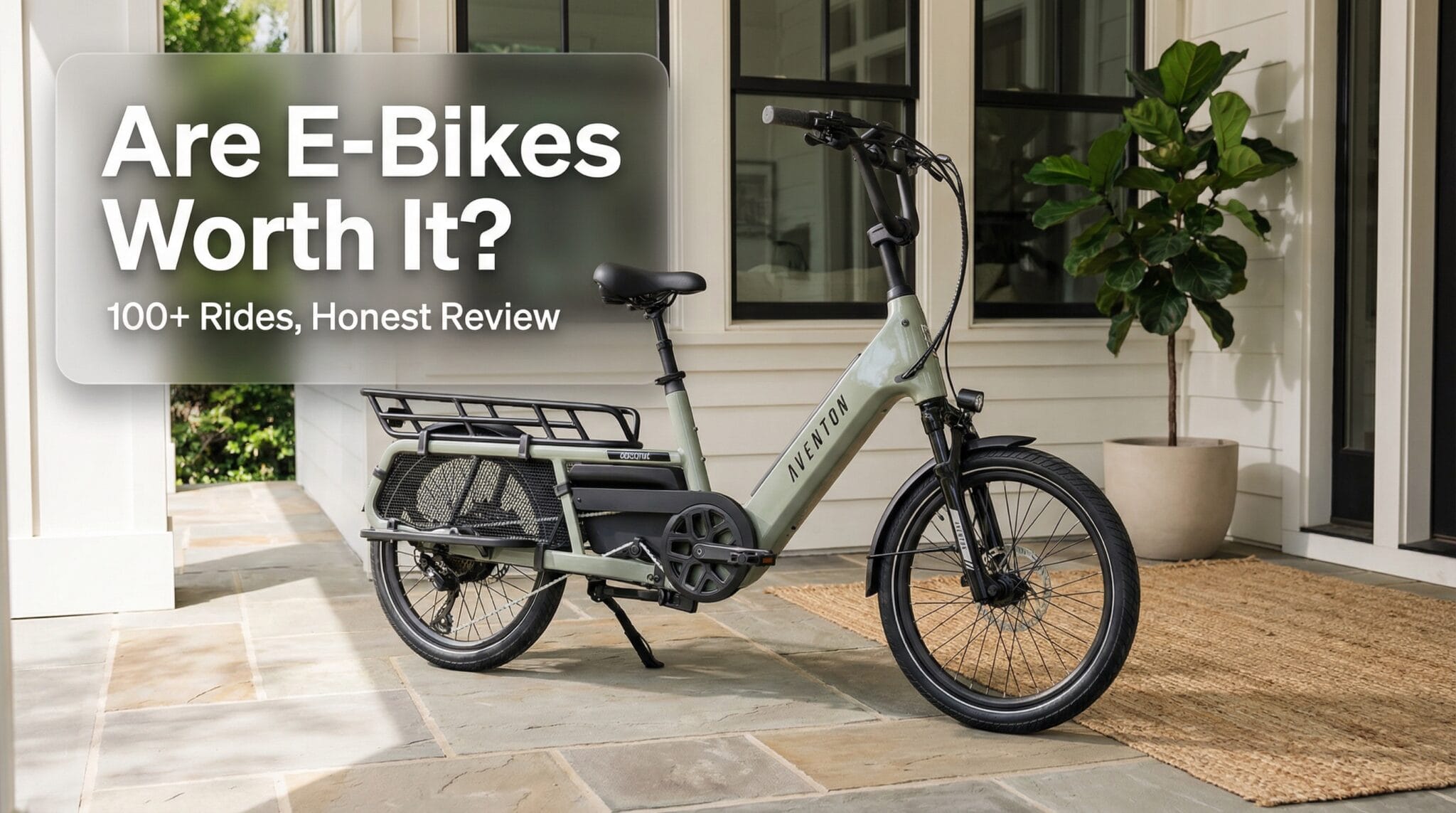
This is the biggest one, and it’s the reason traditional bike sales don’t stick for most people. Everyone buys a regular bike with good intentions. Six months later, it’s gathering dust in the garage because riding uphill is miserable, you arrive sweaty, or the distance is just too far.
E-bikes eliminate the excuses. Hills? The motor handles them. Too far? The battery extends your range to 20-60 miles. Don’t want to arrive sweaty? Pedal-assist lets you cruise at 20 mph with casual effort.
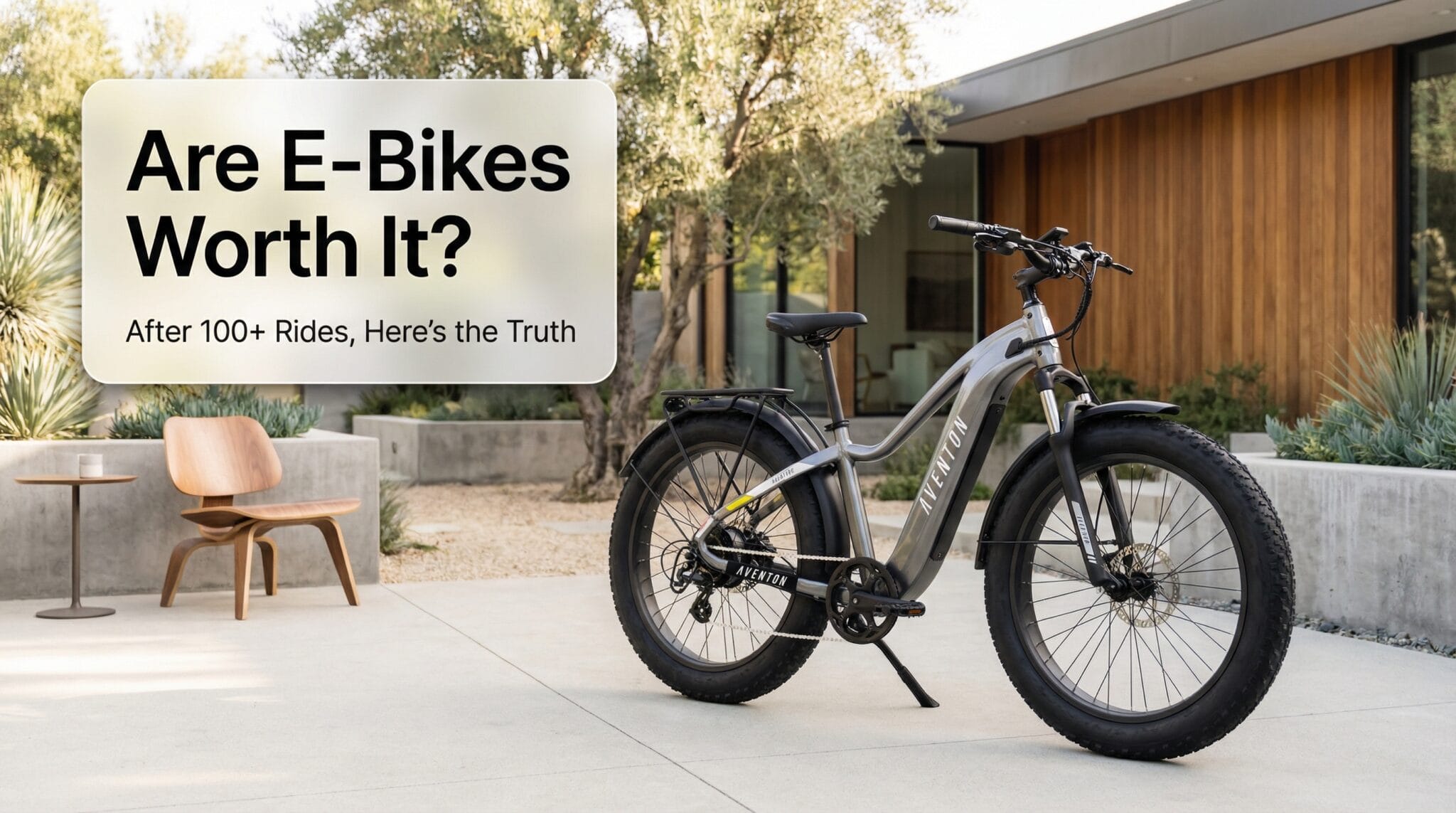
We’ve seen this pattern over and over: people who let their regular bikes collect dust ride their e-bikes 3-5 times per week. The assist makes it fun instead of a chore.
2. It Replaces Car Trips (Not All, But More Than You Think)
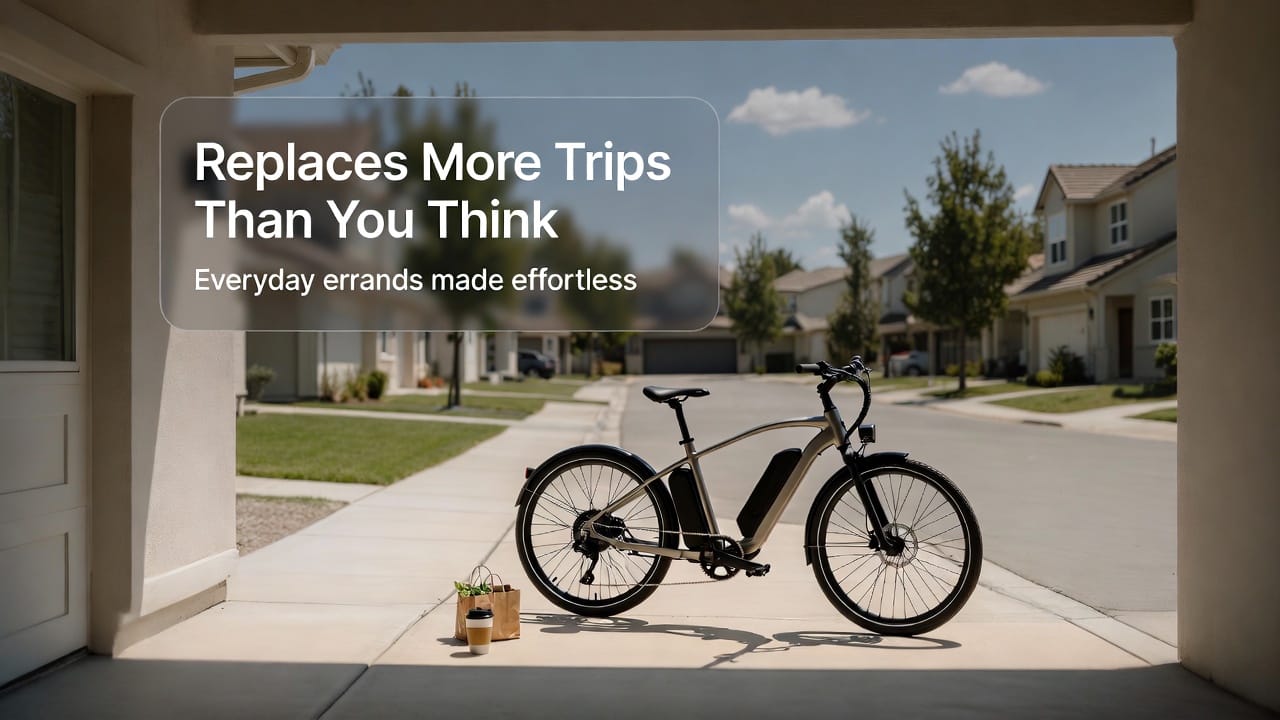
After three years of testing, here are the car trips an e-bike genuinely replaces:
- Commutes under 10 miles (one-way) = the sweet spot
- Grocery runs (with a basket or cargo bike)
- Coffee shop / restaurant trips
- Gym trips (the ride IS your warm-up)
- School drop-off (cargo bikes are huge for this)
- Running errands within 5 miles
You won’t take an e-bike to Costco or on a road trip. But for the 60% of car trips that are under 6 miles? An e-bike is faster, cheaper, and more enjoyable.
3. It’s Exercise (Yes, Really)

“But it has a motor – that’s cheating!”
No. A 2019 study published in Transportation Research Interdisciplinary Perspectives found that e-bike riders get more total exercise than regular bike riders. Not because e-biking is harder – it’s not – but because people ride their e-bikes far more often and for longer distances.
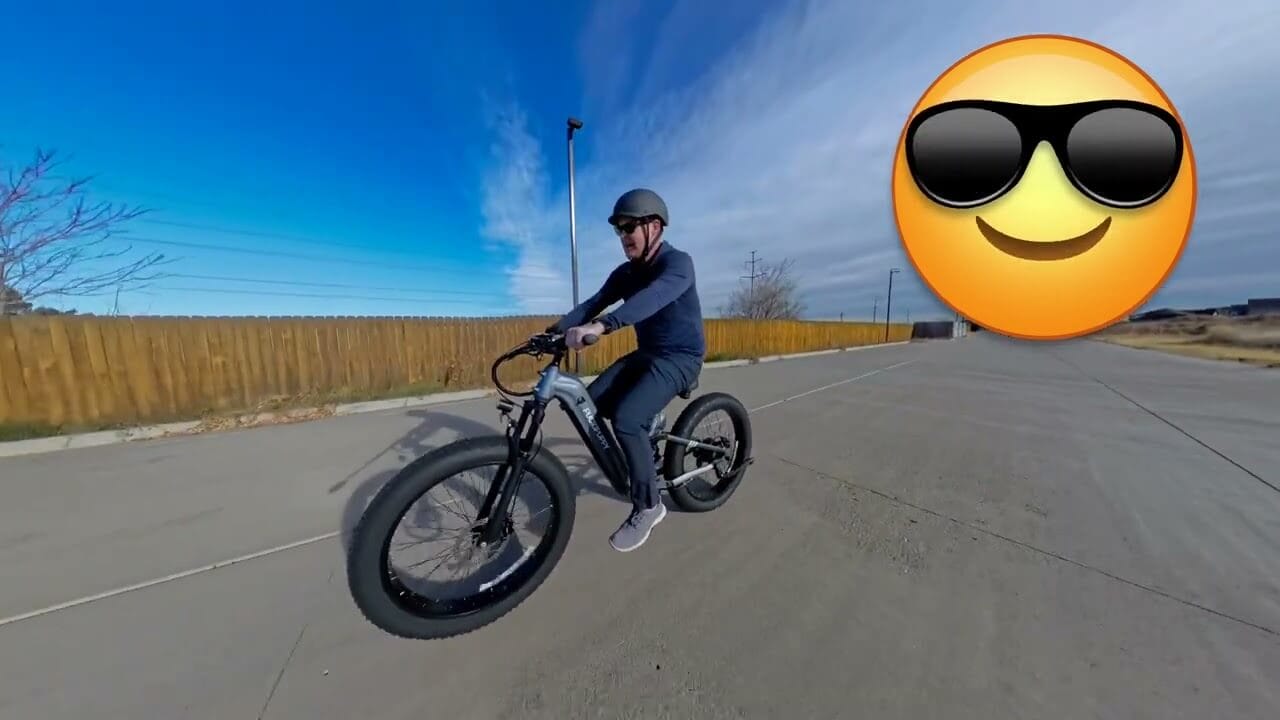
Pedal-assist means you’re still pedaling. Your heart rate is still elevated. You’re still burning calories. You’re just not dying on the hills. Most e-bike riders report burning 300-500 calories per hour of riding, depending on assist level.
The best exercise is the exercise you actually do. E-bikes win here by a landslide.
4. They’re Stupidly Fun
We test a lot of products. Most of them are fine. E-bikes are the one category where every single tester comes back grinning. There’s something about effortlessly cruising at 20 mph on a bike path, wind in your face, zero traffic, that triggers genuine joy.
This isn’t a rational argument. But it’s a real one. Life is short. Fun matters.
5. Parking and Traffic Become Non-Issues
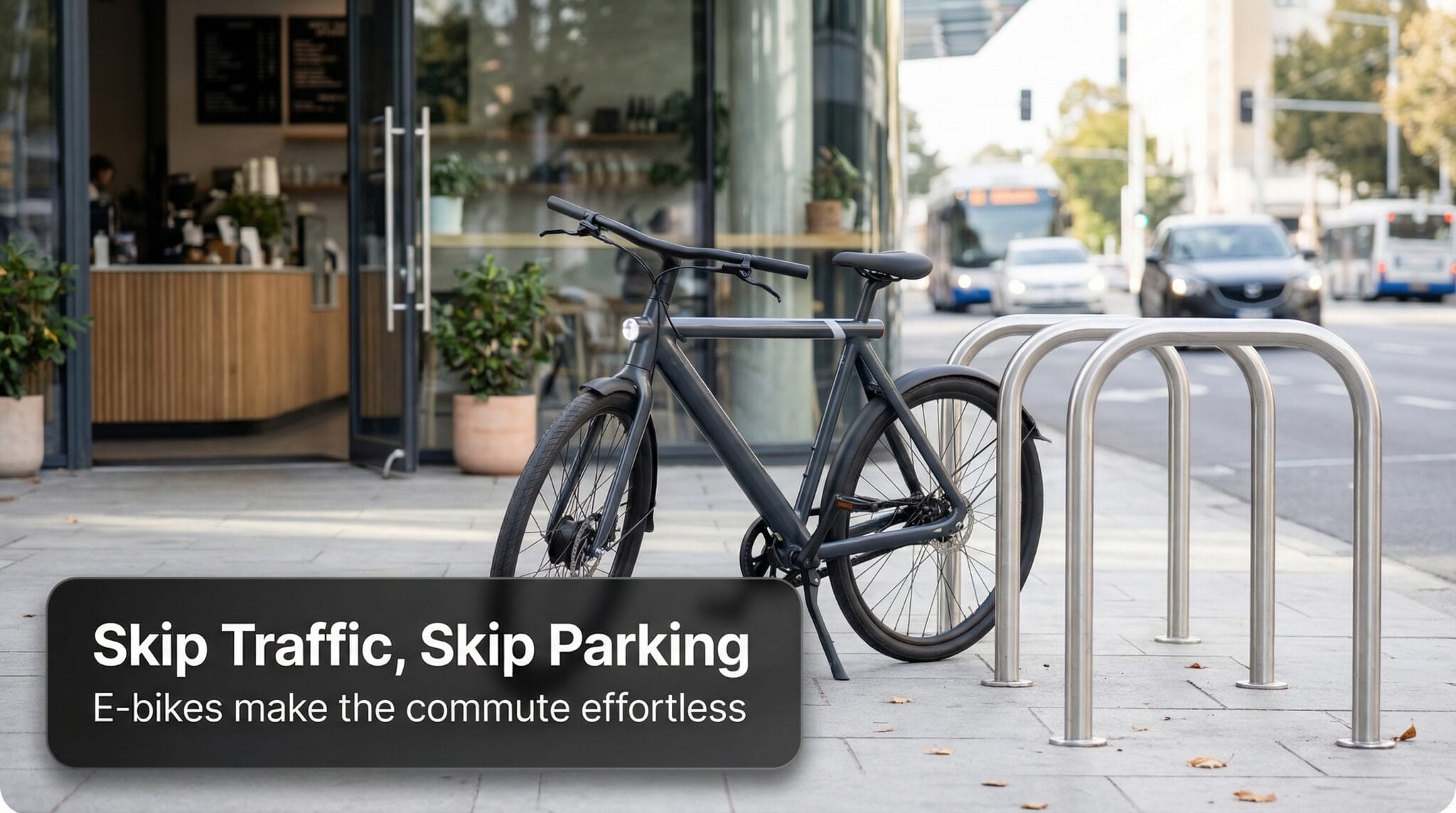
If you live in any moderately congested area, an e-bike transforms your daily experience. Bike lanes bypass traffic. Bike racks are always available. No parking meters, no circling blocks, no garage fees.
In our testing, a 5-mile commute that took 20-30 minutes by car (with parking) consistently took 15-20 minutes by e-bike – door to door. For distances under 5 miles in urban areas, e-bikes are literally faster than cars.
6. Environmental Impact Is Real (If That Matters to You)
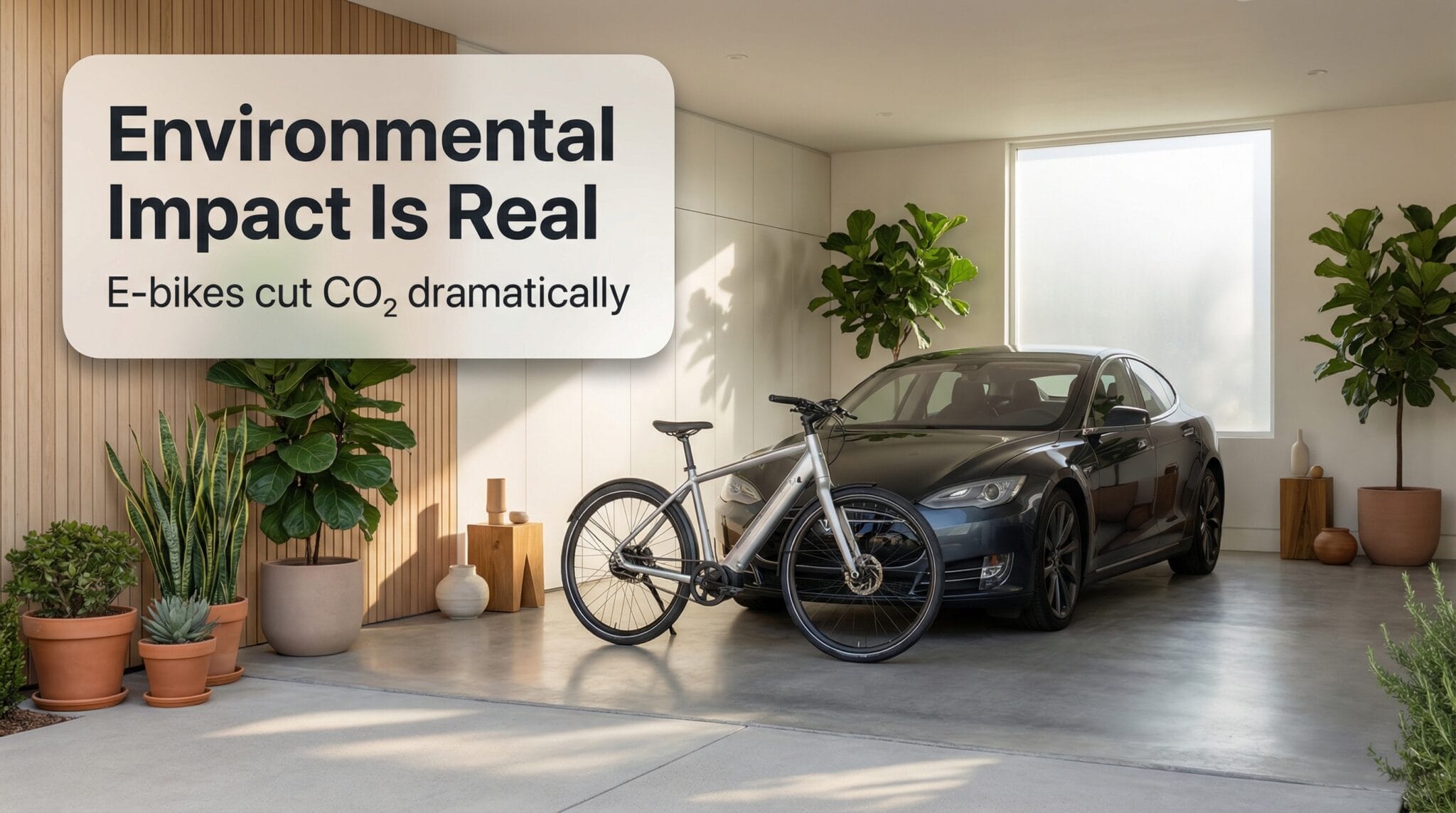
An e-bike produces roughly 8-14g of CO2 per kilometer (from electricity generation). A car produces 170-250g. That’s a 90-95% reduction. If you replace 2,000 miles of car trips per year with e-bike trips, you’re eliminating roughly 1,500 pounds of CO2 emissions annually.
We’re not going to preach about this. But if environmental impact factors into your decisions, e-bikes are one of the highest-impact personal changes you can make.
7. The Technology Has Gotten Really Good
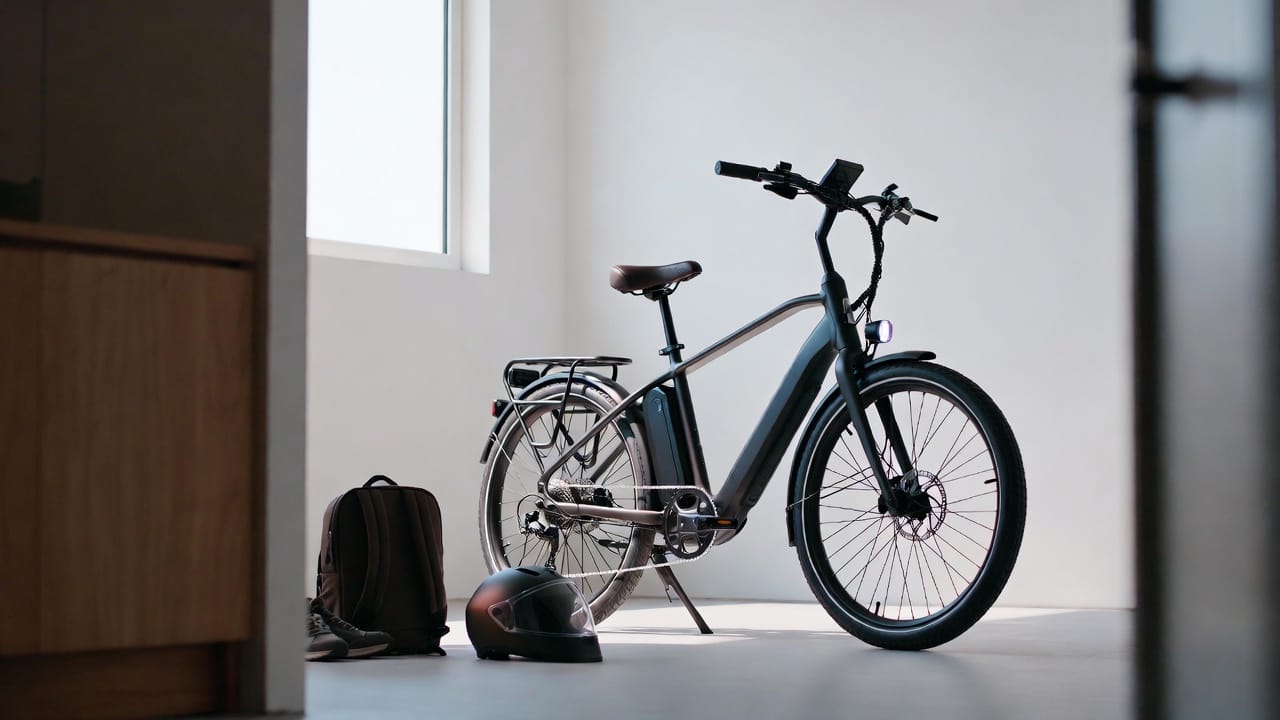
Three years ago, budget e-bikes were sketchy. Motors died, batteries degraded quickly, and customer support was nonexistent. Today, even $1,000 bikes from brands like Lectric and Aventon are legitimately reliable.
Battery technology has improved (expect 500-1,000 full charge cycles, or 3-5 years of daily use before meaningful degradation). Motors are quieter and more powerful. Displays are cleaner. The entire category has matured.
When E-Bikes Are NOT Worth It

We’d be dishonest if we didn’t cover this:
You live somewhere with brutal winters

E-bikes work in rain and light snow, but extended sub-freezing temperatures reduce battery range by 20-40%, and ice is genuinely dangerous on two wheels. If you have 4+ months of real winter, your e-bike will be seasonal. Still worth it if summers are great – but budget for only 7-8 months of use.
You have no secure storage
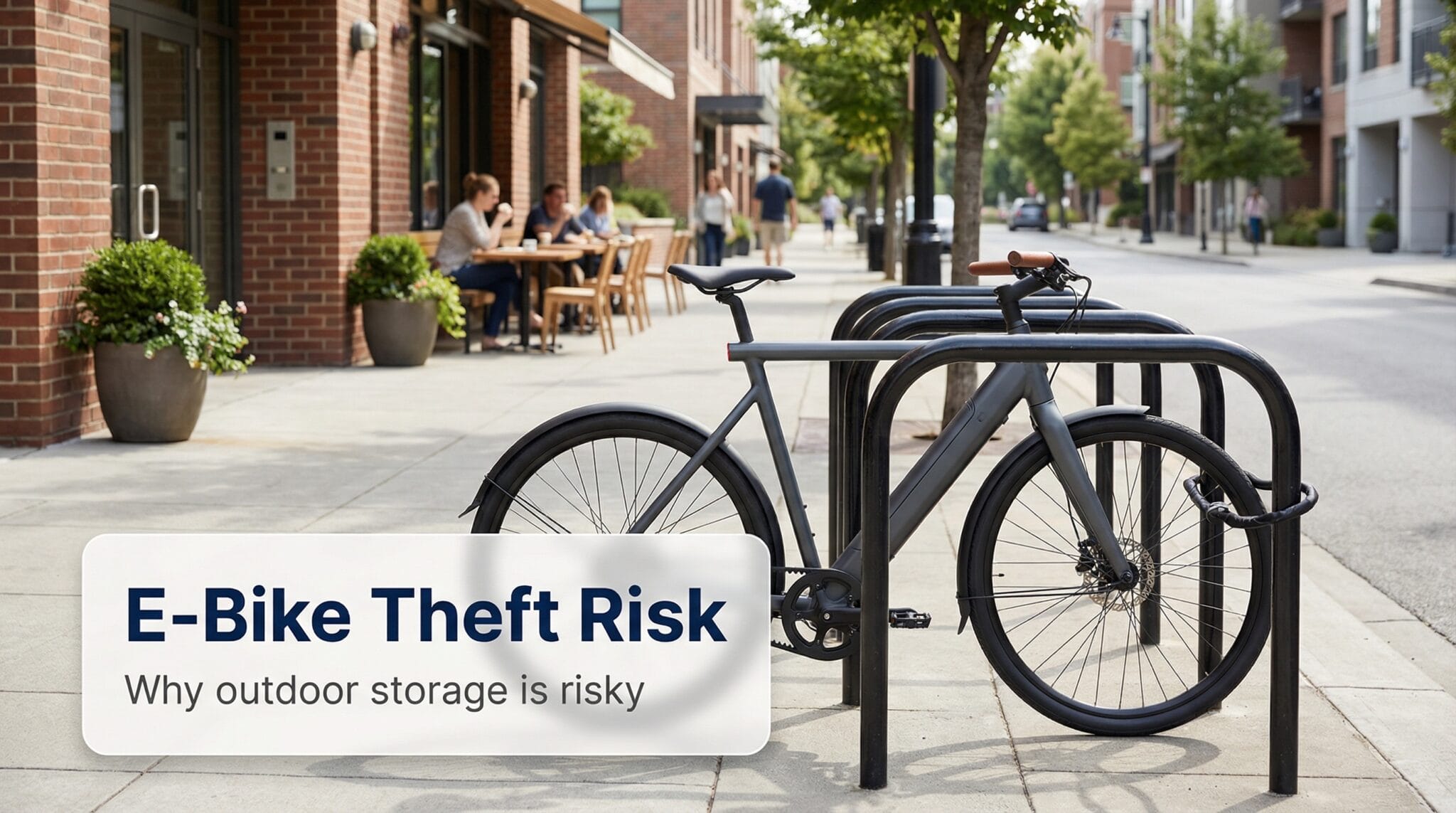
E-bike theft is real. These are $1,000-3,000 machines, and they’re targeted. If you can’t store your bike inside (garage, apartment, office), and your only option is locking it on the street, theft risk is significant. Even with a $100 lock, a determined thief wins.
Your commute is 15+ miles one way

E-bikes have a range of 20-60 miles per charge, but real-world range (with hills, wind, and higher assist levels) is often 30-50% less than advertised. A 15-mile commute each way means you’re pushing range limits, especially in cold weather. Doable, but stressful.
You need to carry 4 people and cargo
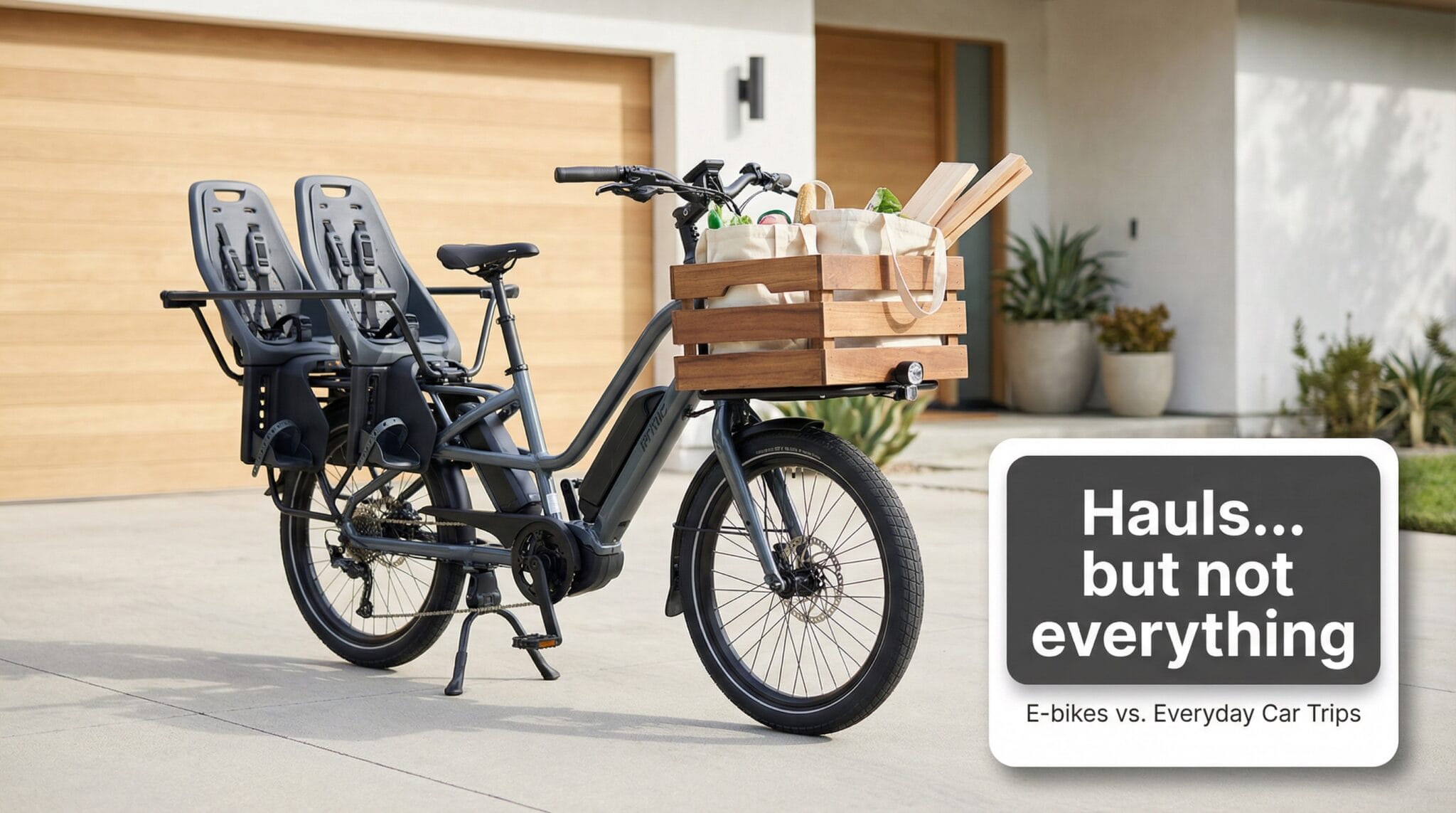
E-bikes replace car trips, not the car itself. If your daily driving involves hauling kids, dogs, and Home Depot lumber, an e-bike might not be for you. It’s a complement – not a replacement.
You just want to look cool
E-bikes are getting cooler-looking, but if your primary motivation is aesthetics, you’ll spend $3,000 on something that sits in the garage once the novelty wears off. The people who love their e-bikes are the ones who ride them for practical purposes.
E-Bike Myths We Can Finally Debunk
“E-bikes are just for old people.” Our youngest tester is 24. The fastest-growing e-bike demographic is 25-44 year olds.
“You don’t get exercise.” You do. Studies prove it. You just don’t suffer as much.
“They’re too expensive.” Compared to a car? They’re 90% cheaper to buy and 95% cheaper to operate. The Lectric XP 3.0 starts at $799 and is genuinely good.
“The battery will die after a year.” Modern lithium-ion batteries last 500-1,000 charge cycles. At one charge per day, that’s a minimum of 2-3 years. Most riders charge 3-4 times per week, extending life to 4-6 years. Replacement batteries cost $300-500.
“They’re dangerous.” E-bikes are as dangerous as regular bikes – the speed is similar (most are capped at 20 mph). Wear a helmet, follow traffic laws, and use lights. The same rules apply.
Our Bottom Line: are e-bikes worth it?
Definitely worth it if you:
- Commute under 10 miles and are tired of traffic/parking
- Want to exercise but hate suffering on hills
- Live somewhere with decent bike infrastructure
- Have secure storage (garage or indoor)
- Want to reduce car trips without giving up your car
Probably worth it if you:
- Live in a mild climate (or accept seasonal use)
- Want a fun weekend activity that’s also practical
- Are interested in reducing your carbon footprint
- Already enjoy cycling but want to extend your range

Probably not worth it if you:
- Live somewhere with no bike lanes and aggressive drivers
- Can’t store the bike securely
- Have a 20+ mile round-trip commute with no charging at work
- Are buying it purely because it seems trendy
If you’re in the “worth it” camp, check out our Best E-Bikes guide for our top picks across every budget and riding style. We’ve tested over 20 bikes and have strong opinions.
For commuters specifically, our Best E-Bikes for Commuting guide covers the bikes that are best suited for daily riding.
And if budget is your main concern, our Best E-Bikes Under $1,500 roundup proves you don’t need to spend a fortune to get a great ride.
Last updated: January 2026.