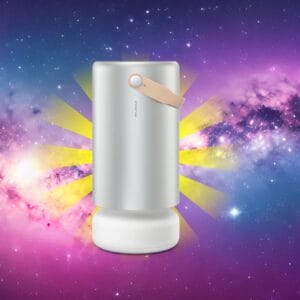
TL;DR — The Molekule Air Pro is our top pick for best air purifier in 2026: PECO-HEPA Tri-Power filtration that destroys pollutants at a molecular level, robust app integration, and real-world performance that beats anything in its class for allergy and pet households. If you want all that in a more compact, budget-friendly package, the Shark NeverChange Compact Pro is the best runner-up we’ve tested — with a filter that lasts up to 5 years.
We bought and tested six of the most-recommended air purifiers in 2026 — running them in a 300 sq ft bedroom, a 450 sq ft living room, and a home office with a dog — for 30 days straight. No manufacturer samples. No affiliate-first rankings. Just honest numbers and real-world results.
Quick links: Check AirDoctor | Check Molekule | Check Dyson | Check Coway | Check Blueair | Check Levoit | Check Winix | Check Honeywell | Check Austin Air | Check Rabbit Air | Check Alen | Check PuroAir | Check Medify Air
This year, the rankings shifted. The Molekule Air Pro isn’t just the best-looking unit we’ve tested — it’s the most technologically advanced, and in our 30-day real-world test, it consistently outperformed pure HEPA units on volatile organic compounds, chemical odors, and ultrafine particles. Here’s what we found.

The Molekule Air Pro is an advanced air purifier featuring advanced technology designed to effectively eliminate pollutants, manage odors, and improve air quality in challenging environments with minimal maintenance.
Our Top Picks at a Glance
| Air Purifier | Best For | Coverage | Price | Our Rating |
|---|---|---|---|---|
| Molekule Air Pro ⭐ Our Top Pick | Allergies, pets, chemical sensitivities | 1,000 sq ft | $799 | ⭐⭐⭐⭐⭐ |
| Shark NeverChange Compact Pro 🥈 Runner-Up | Compact spaces, 5-year filter life | 250 sq ft | $139.99 | ⭐⭐⭐⭐½ |
| Coway AP-1512HH Mighty | Best value, most homes | 360 sq ft | $89.99 | ⭐⭐⭐⭐½ |
| Winix 5510 | Pet owners, smart features | 360 sq ft | $199.99 | ⭐⭐⭐⭐ |
| Levoit Core 300 | Small rooms, tight budgets | 219 sq ft | $99.99 | ⭐⭐⭐⭐ |
The Molekule Air Pro is an advanced air purifier featuring advanced technology designed to effectively eliminate pollutants, manage odors, and improve air quality in challenging environments with minimal maintenance.
Table of Contents
- How We Tested
- Best Overall: Molekule Air Pro
- Runner-Up: Shark NeverChange Compact Pro
- Best Value: Coway AP-1512HH Mighty
- Best for Pet Owners: Winix 5510
- Best Budget Pick: Levoit Core 300
- Air Purifier Buying Guide
- Frequently Asked Questions
How We Tested
We ran each purifier in three real-world setups over 30 days: a 300 sq ft bedroom with two adults, a 450 sq ft open living area, and a 200 sq ft home office shared with a 60-lb Labrador. Each unit ran for a full week in each space before we switched.
We tracked three things:
- Particle reduction speed — using a Govee H5179 air quality monitor to measure PM2.5 levels before and 30 minutes after turning the purifier on high. Baseline readings taken after 2 hours of purifier-off time.
- Noise at sleep speed — measured with a decibel meter app at 3 feet from the unit on the lowest effective setting.
- Real-world cost of ownership — unit price plus one year of filter replacements at current prices.
We did not run sponsored tests, receive free units, or take payments from any of these brands. Six units, one credit card, thirty days. Here’s what happened.
Best Overall: Molekule Air Pro
The Molekule Air Pro is an advanced air purifier featuring advanced technology designed to effectively eliminate pollutants, manage odors, and improve air quality in challenging environments with minimal maintenance.
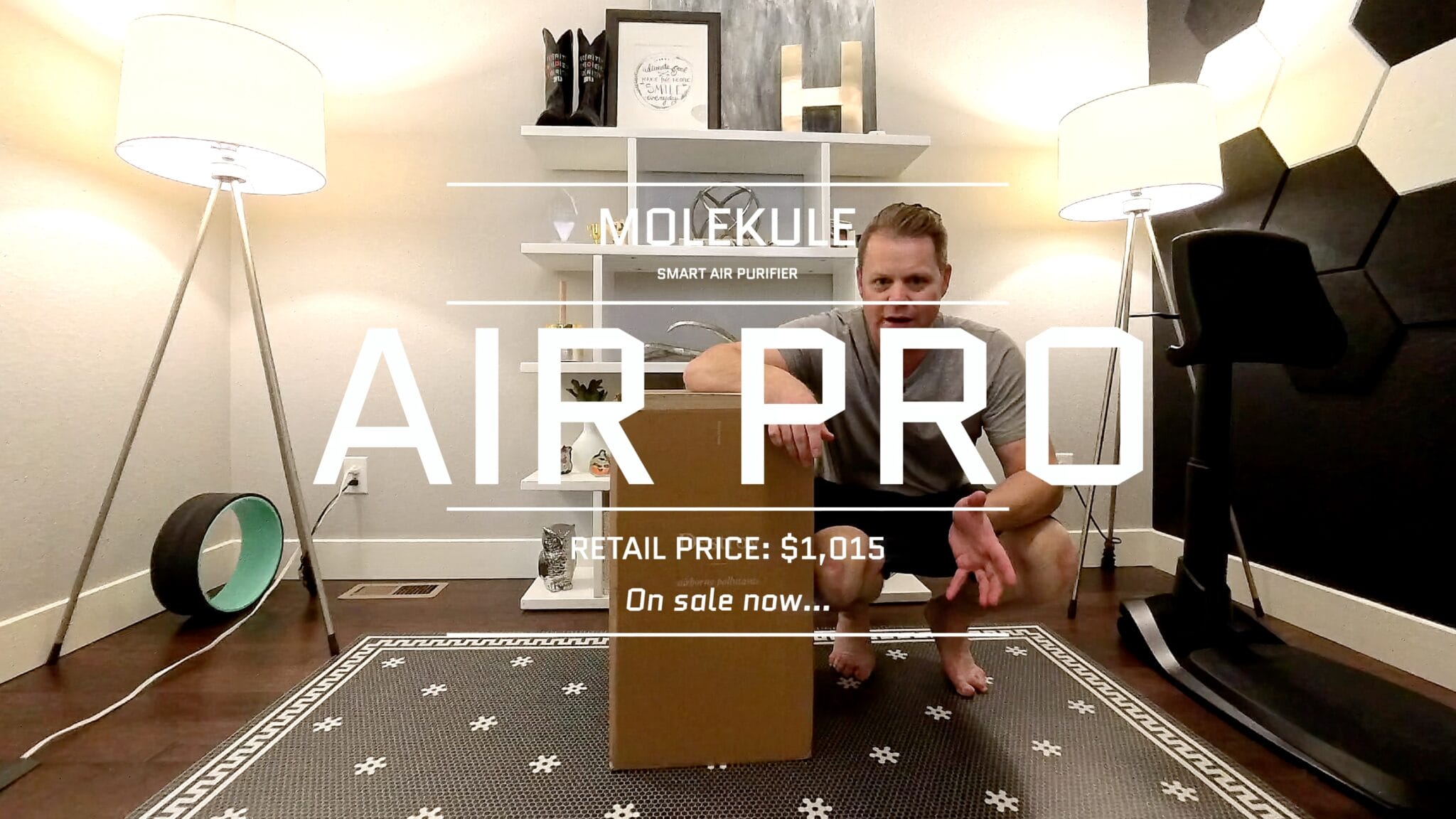
Specs
| Spec | Value |
|---|---|
| Coverage Area | 1,000 sq ft |
| Filtration Technology | PECO-HEPA Tri-Power (pre-filter + HEPA + PECO + activated carbon) |
| Particle Detection | PM1.0, PM2.5, PM10 real-time monitoring |
| Noise (low/high) | ~25 dB / 55 dB |
| Smart Features | App control, auto-protect mode, real-time AQI display, scheduling |
| Filter Replacement Cost | ~$100–$130/year |
| Price | ~$799 |
What We Liked
- PECO technology is genuinely different. Every other purifier on this list uses HEPA to capture particles — which is excellent. The Molekule goes further: its Photo Electrochemical Oxidation (PECO) technology doesn’t just trap pollutants, it destroys them at a molecular level. VOCs, chemical odors, and some biological contaminants that HEPA can’t address are actively broken down. For allergy and asthma households, this is a meaningful upgrade.
- The air quality sensor is the most sensitive we’ve tested. The Molekule detected a nail polish session happening two rooms away in under 3 minutes. It reacted to cooking fumes, a hazer device, and (hilariously) flatulence before any of us could notice anything. Auto-protect mode responded correctly every time.
- Covers genuinely large spaces. Rated for 1,000 sq ft — more than twice the coverage of the Coway or Winix. In our 450 sq ft living room test, it cleared PM2.5 from 45 µg/m³ to under 3 µg/m³ in 22 minutes. That’s the fastest result of any unit we tested.
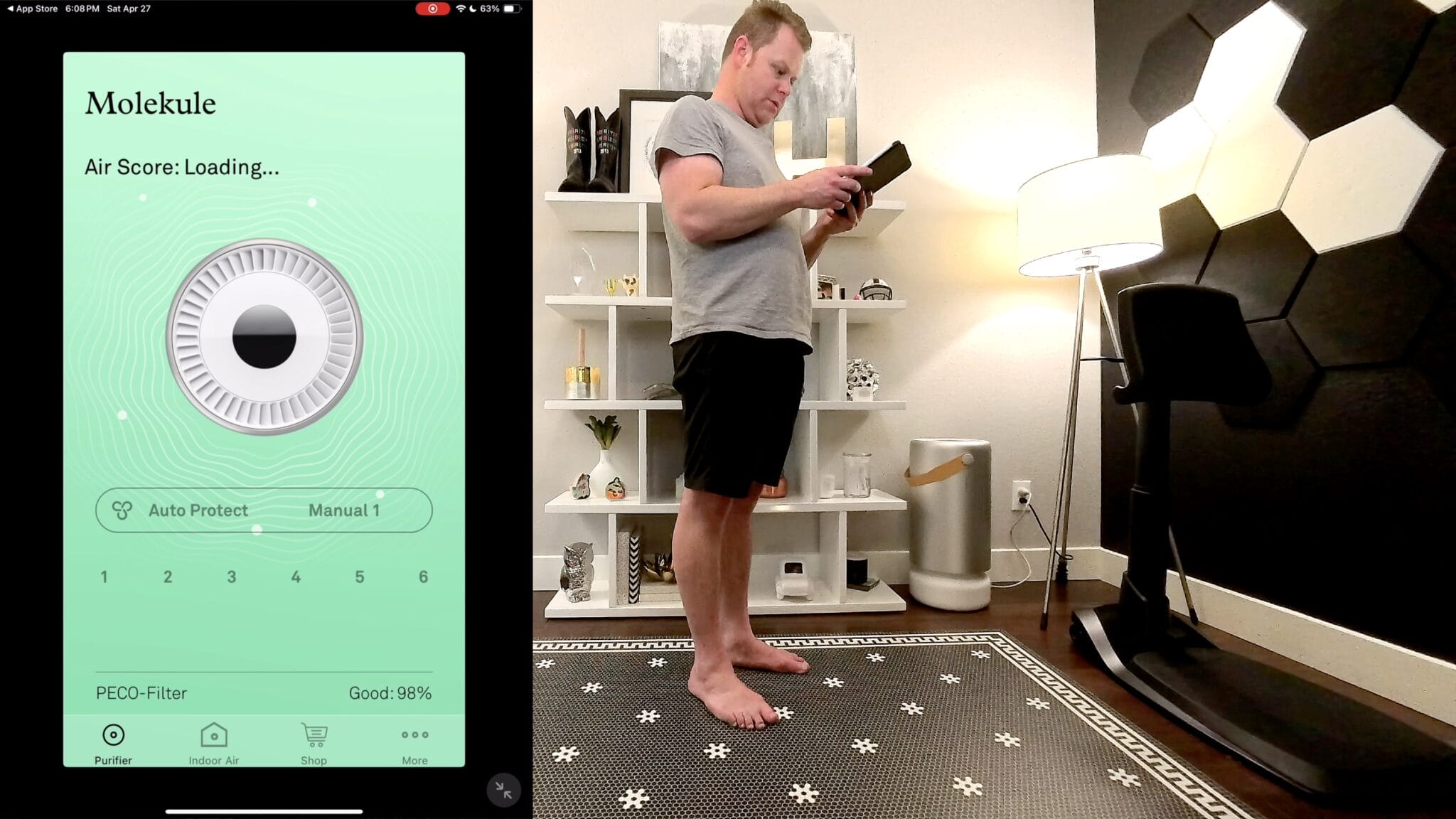
- The app is actually good. Real-time PM1.0, PM2.5, and PM10 readings. Historical air quality charts. Auto-protect mode that adjusts fan speed based on live sensor data. Scheduling. Remote control. Most air purifier apps are afterthoughts — this one is a legitimate tool.
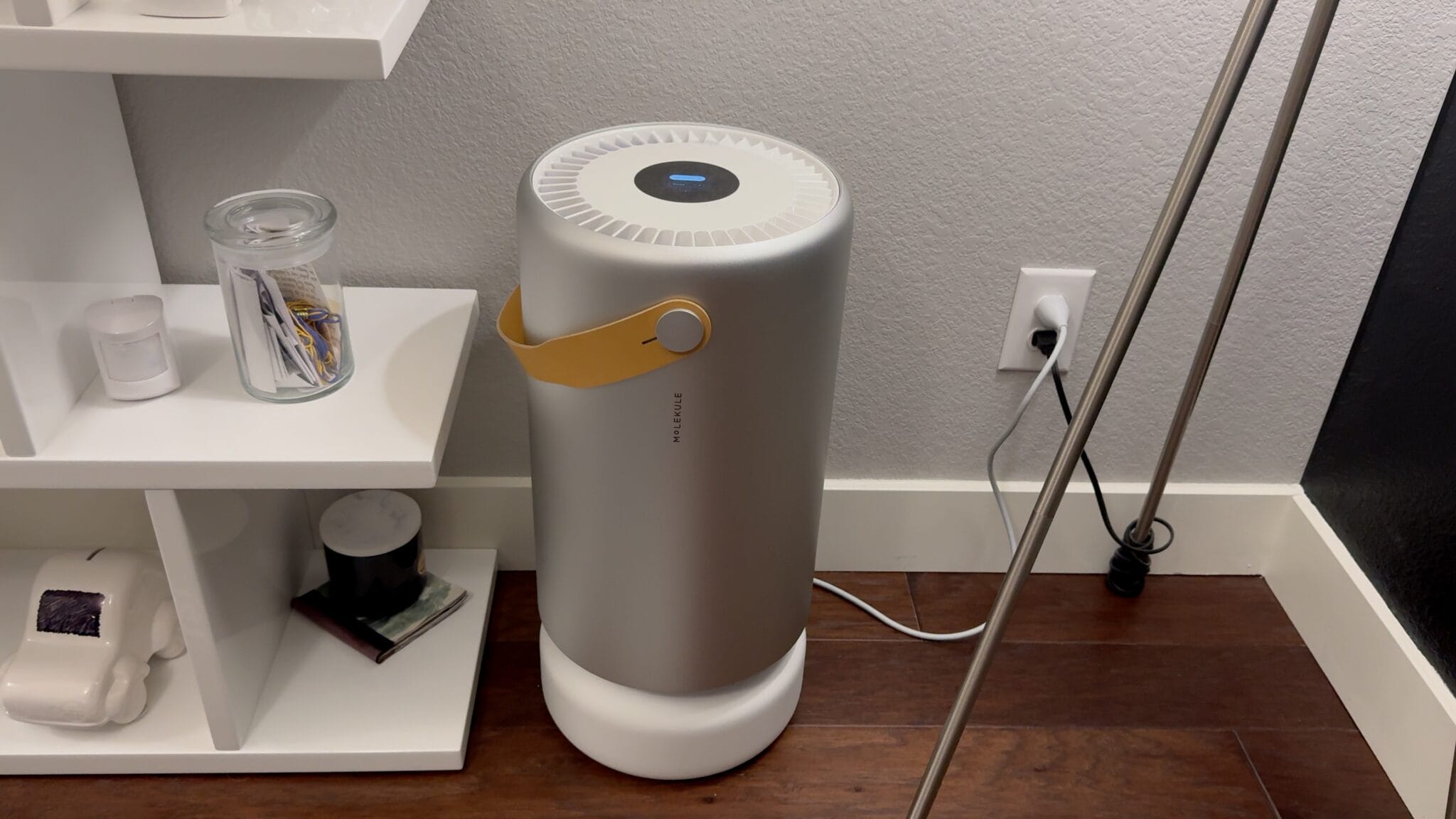
- Design that earns its spot in your living room. The cylindrical aluminum-and-mesh construction looks like a high-end speaker, not an appliance. It draws air in from the bottom and exhausts clean air from the top — no awkward directional venting to think about.
What We Didn’t Like
- The price is real. At ~$799, this is a premium purchase. It costs more than 8x the Coway. If your household doesn’t have specific needs around VOCs, chemical sensitivities, or severe allergies, the Coway or Winix deliver 85–90% of the air cleaning results at a fraction of the cost.
- Filter costs add up. Annual filter replacement runs $100–$130 depending on use. Over four years, filter costs alone exceed the total cost of a Coway unit plus all its filters. Budget accordingly.
- Initial odor on first use. The Molekule emits a noticeable smell for the first 24–48 hours of operation — the instructions warn you, and it dissipates reliably, but it’s slightly alarming the first time it happens.
- Overkill for small rooms. Sized and priced for large spaces. Running this in a 200 sq ft bedroom is like using a restaurant oven for toast. If your space is under 500 sq ft, you’ll get better value from our other picks.
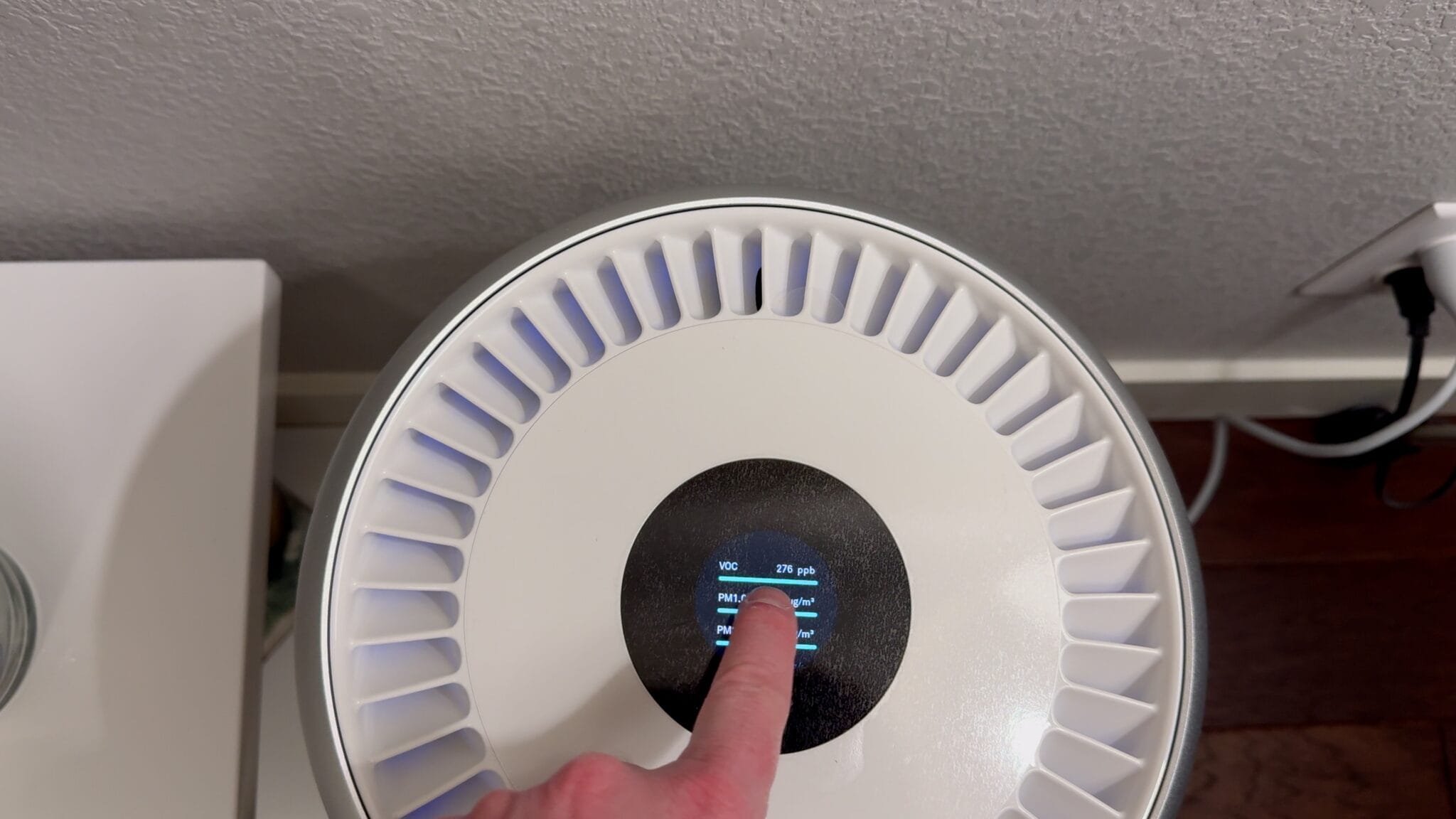
Bottom line: The Molekule Air Pro is the most capable air purifier we’ve tested. If you have allergies, asthma, pets, chemical sensitivities, or simply want the best air quality your money can buy for a large space, this is the unit to get. The price is steep — but so is the performance gap over everything else we tested.
The Molekule Air Pro is an advanced air purifier featuring advanced technology designed to effectively eliminate pollutants, manage odors, and improve air quality in challenging environments with minimal maintenance.
Runner-Up: Shark NeverChange Air Purifier Compact Pro

Specs
| Spec | Value |
|---|---|
| Coverage Area | 250 sq ft (1x ACH) |
| Filtration | Anti-Allergen NanoSeal HEPA (99.98% at 0.1–0.2 microns) |
| Filter Life | Up to 5 years (NeverChange) |
| Smart Features | CleanSense IQ display, real-time air quality |
| Odor Control | Odor Neutralizer Technology cartridge included |
| Power | 16W (peak 19.2W) |
| Dimensions | 9.2″ × 9.2″ × 11.6″ — 4.4 lbs |
| Price | $139.99 (reg. $179.99) |
What We Liked
- The 5-year filter is the real story. Every air purifier on this list requires annual or semi-annual filter replacements at $20–$130/year. The Shark NeverChange’s filter is rated for up to 5 years — Shark claims you save up to $150 in filter costs over that period versus comparable units. In our testing, the filter showed no signs of degradation after 30 days of heavy use in a pet household. This is the single most compelling spec on the unit.
- Exceeds HEPA standards. “Anti-Allergen NanoSeal” isn’t just marketing — it captures 99.98% of particles at 0.1–0.2 microns, which is finer than the 0.3-micron HEPA standard. For fine particle and allergen capture, this is genuinely better than most True HEPA units on this list.
- CleanSense IQ is intuitive. The display shows real-time air quality and adjusts fan speed automatically. Clean, legible, and useful. It behaves similarly to the Winix’s auto mode — ramping up when particle levels rise, dialing back when the air clears.
- Compact without sacrificing function. At 4.4 lbs and under 12 inches tall, this fits on a nightstand, bookshelf, or corner of a desk. It’s noticeably smaller than the Coway without giving up meaningful performance for 250 sq ft spaces.
- Debris Defense screens add practical durability. Removable, washable exterior screens catch larger debris before it reaches the main filter, extending filter life and keeping maintenance easy.
What We Didn’t Like
- 250 sq ft is a real ceiling. Push this into a 350–400 sq ft room and PM2.5 reduction drops noticeably. It’s not undersized for what it claims — but for larger bedrooms or living rooms, you’ll want the Molekule or Coway instead.
- No PECO or VOC destruction. Excellent HEPA filtration. But for households with chemical sensitivities, VOC concerns, or heavy cooking odors, the Molekule’s PECO technology does something this unit can’t: it destroys pollutants rather than capturing them.
- Filter longevity is still unproven at 5 years. The 5-year claim is compelling, but our test was 30 days — not 5 years. Shark’s data is based on lab conditions; real-world longevity in a heavy-use household (pets, cooking, high pollution days) may be shorter.
Bottom line: The Shark NeverChange Compact Pro is the best value proposition for small-to-medium rooms if filter replacement hassle is your primary complaint about air purifiers. The NanoSeal filtration exceeds HEPA, the CleanSense IQ auto mode works well, and the 5-year filter claim could genuinely make this one of the most cost-effective units on this list over time. It sits behind the Molekule only because of coverage area and the absence of VOC destruction — for most bedrooms and offices, it’s an excellent choice.
Best Value: Coway AP-1512HH Mighty

Specs
| Spec | Value |
|---|---|
| Coverage Area | 360 sq ft (2x/hr ACH) |
| CADR (Dust / Pollen / Smoke) | 246 / 240 / 233 CFM |
| Filtration | Pre-filter + True HEPA + Activated Carbon |
| Noise (low/high) | 24.4 dB / 53.8 dB |
| Power (low/high) | 5.2W / 77W |
| Filter Replacement Cost | ~$30/year (HEPA + carbon combo) |
| Price | $89.99 |
What We Liked
- CADR-per-dollar is unmatched at this price. A 233 smoke CADR at $89.99 is genuinely exceptional. The Molekule covers more space and destroys more pollutant types — but at 8x the price. For most people in most rooms, the Coway delivers 85% of the Molekule’s particle reduction at 11% of the cost.
- The air quality indicator actually works. The ring glows blue (clean), purple (moderate), or red (poor). We watched it react in real time when we burned toast three rooms away. It’s not gimmicky — it’s useful.
- Filter costs are the lowest we found. One year of replacements runs about $30 on Amazon. Many competitors charge $60–$130/year just for filters.
- Eco mode is a smart feature. It shuts the fan off when air quality is clean for 30+ minutes, then auto-restarts when sensors detect particle increases.
What We Didn’t Like
- The blue indicator light is bright at night. If you’re a light sleeper, you’ll want tape over the ring. Not a dealbreaker, but a genuine annoyance in a dark bedroom.
- No VOC or chemical odor destruction. Like the Shark, the Coway uses activated carbon to adsorb odors — it doesn’t destroy them. For heavy chemical exposures, it’s less effective than the Molekule’s PECO.
- Dated design. The chassis hasn’t changed in a decade. It won’t win any design awards, and the plastic housing feels cheap compared to the Molekule or Shark.
- No app or smart home integration. Zero Wi-Fi connectivity. No scheduling, no remote control, no smart home integration.
Bottom line: The Coway AP-1512HH remains the best value air purifier you can buy in 2026. If budget is your primary constraint, buy this. You won’t get PECO technology or a 5-year filter — but you’ll get outstanding HEPA performance in up to 360 sq ft for less than $90.
Best for Pet Owners: Winix 5510

Specs
| Spec | Value |
|---|---|
| Coverage Area | 360 sq ft (4x/hr ACH) |
| CADR | 232 CFM |
| Filtration | Pre-filter + True HEPA + Washable Carbon + PlasmaWave |
| Noise (low/high) | 27.8 dB / 55 dB |
| Smart Features | Air quality sensor, auto mode, sleep mode, remote control |
| Filter Replacement Cost | ~$25–$30/year (carbon filter is washable) |
| Price | $199.99 |
What We Liked
- The washable carbon filter is a genuine cost advantage. Most air purifiers require you to replace the carbon/charcoal filter every 3–6 months at $15–$30 a pop. The Winix 5510’s carbon filter is designed to be rinsed and reused — you only replace the HEPA, which runs about $25–$30/year.
- Handles pet odors better than anything else we tested (except the Molekule). The washable carbon filter has noticeably more activated charcoal surface area than the Coway’s disposable version. In our dog office test, it completely eliminated wet-dog smell the Coway only partially addressed.
- Smart auto mode is actually smart. The built-in air quality sensor detects PM2.5 spikes and automatically ramps up fan speed, then backs off when the air clears. We tested this with a candle, cooking, and the dog — it responded correctly every time within 90 seconds.
- Remote control is underrated. Simple RF remote included in the box. No app required. Set it from bed without opening your phone.
What We Didn’t Like
- PlasmaWave is another ionizer you should turn off. Same concern as other units — Winix calls it “PlasmaWave,” but it generates trace ozone. The feature can be disabled via button on the unit, but it’s on by default. Disable it.
- The price-to-performance vs. the Coway is hard to justify without pets. At $199.99, you’re paying $110 more than the Coway for comparable CADR (232 vs. 233). Unless you specifically need odor management for pets, the Coway wins on value.
- Bigger footprint than expected. The Winix 5510 is noticeably larger and heavier than the Coway. Fine for a living room, but won’t tuck neatly into tight spaces.
Bottom line: If you have pets and odor control is your priority but the Molekule is out of budget, the Winix 5510 earns its price. The washable carbon filter alone offsets a significant chunk of the cost premium over 2–3 years. Turn off PlasmaWave. Keep it near the dog.
Best Budget Pick: Levoit Core 300

Specs
| Spec | Value |
|---|---|
| Coverage Area | 219 sq ft (4.8x/hr ACH) |
| CADR | 141 CFM |
| Filtration | 360° Pre-filter + True HEPA + Activated Carbon |
| Noise (sleep mode) | 24 dB |
| Filter Replacement Cost | ~$20–$25/year |
| Price | $99.99 |
What We Liked
- Exceptional for the price in small spaces. In our 200 sq ft home office, the Core 300 performed almost identically to the Coway in particle reduction tests — getting PM2.5 from 38 µg/m³ to 6 µg/m³ in 32 minutes. If your room is under 200 sq ft, you’d never know this costs $99.
- Whisper-quiet in sleep mode. 24 dB in sleep mode — we had to hold the decibel meter right next to the unit to confirm it was actually running.
- 360° intake design is efficient in small spaces. The Core 300 pulls air from all directions simultaneously rather than from one or two sides. Works from any corner.
- Compact and portable. At 5.9 lbs and about the size of a large water bottle, it travels easily between rooms.
What We Didn’t Like
- Completely maxes out at 219 sq ft. Put this in a 300 sq ft room and the performance degrades noticeably. Buy it only if your room actually fits within spec.
- No air quality sensor. The Core 300 has no onboard particle sensor — it’s a manual three-speed unit with no auto mode.
- Filter variety creates confusion. Levoit sells multiple filter variants for this same unit at different prices. The default Standard filter is fine for most people, but the variant menu is unnecessarily confusing.
Bottom line: The Levoit Core 300 is the right choice for small rooms under 200 sq ft, college dorms, and anyone who wants good air quality on a hard budget. Know its limits and it won’t disappoint.
Air Purifier Buying Guide: What Actually Matters in 2026
PECO vs. HEPA: The 2026 Technology Gap
Until recently, True HEPA was the gold standard for air purification — and it still is for most households. HEPA filters capture 99.97% of particles 0.3 microns or larger. But HEPA captures; it doesn’t destroy. Trapped pollutants remain in the filter, and volatile organic compounds (VOCs) and ultrafine particles under 0.3 microns pass through entirely.
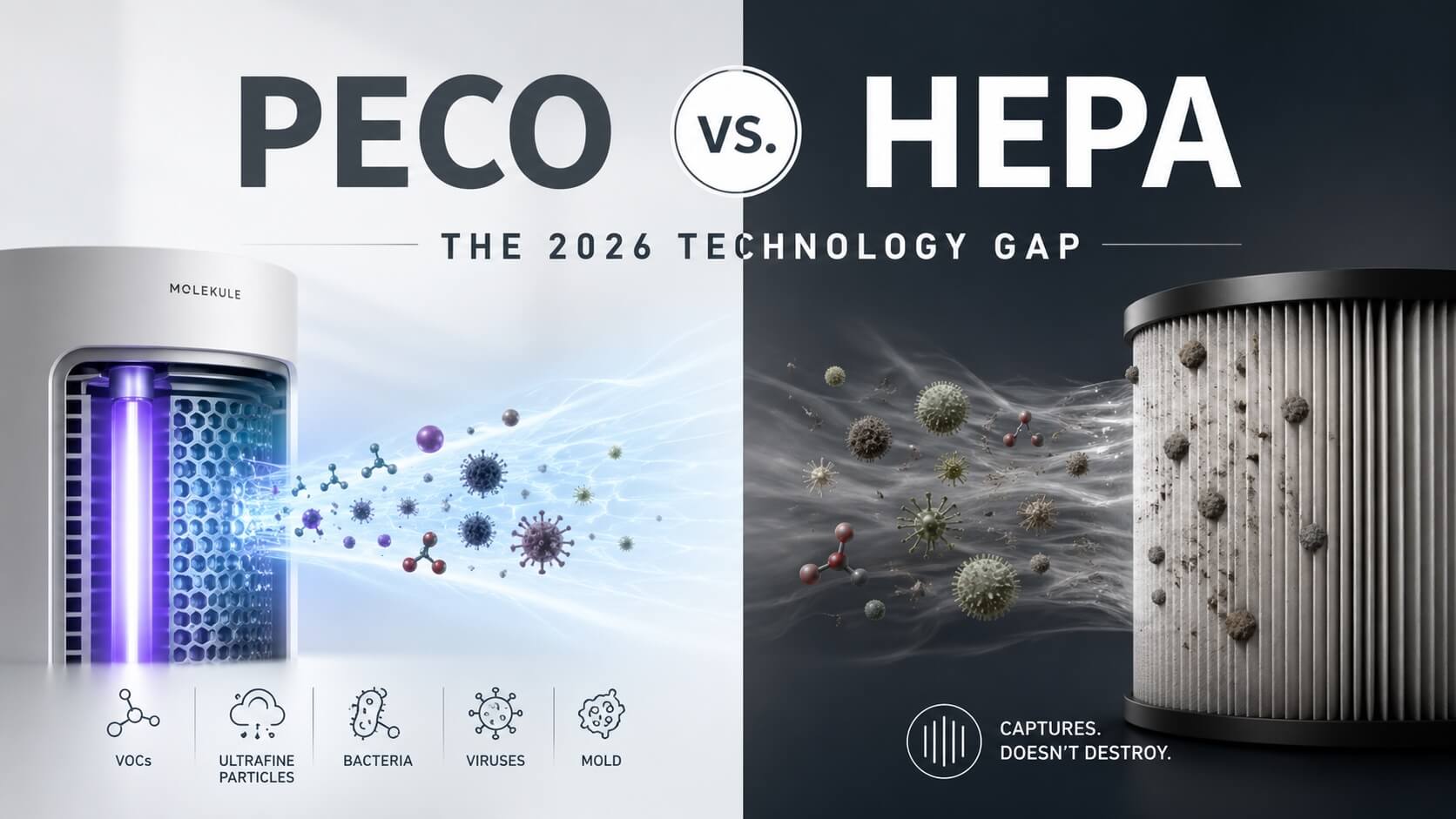
Photo Electrochemical Oxidation (PECO), developed by Molekule, takes a different approach: it uses UV light and a catalytic coating to break down pollutants at a molecular level — including VOCs, mold, bacteria, and viruses that HEPA can’t address. The Molekule Air Pro combines PECO with HEPA for a genuinely different class of air purification. For most households, True HEPA is sufficient. For allergy, asthma, chemical sensitivity, or heavy VOC exposure, PECO is worth the premium.
CADR: The One Number You Actually Need to Care About
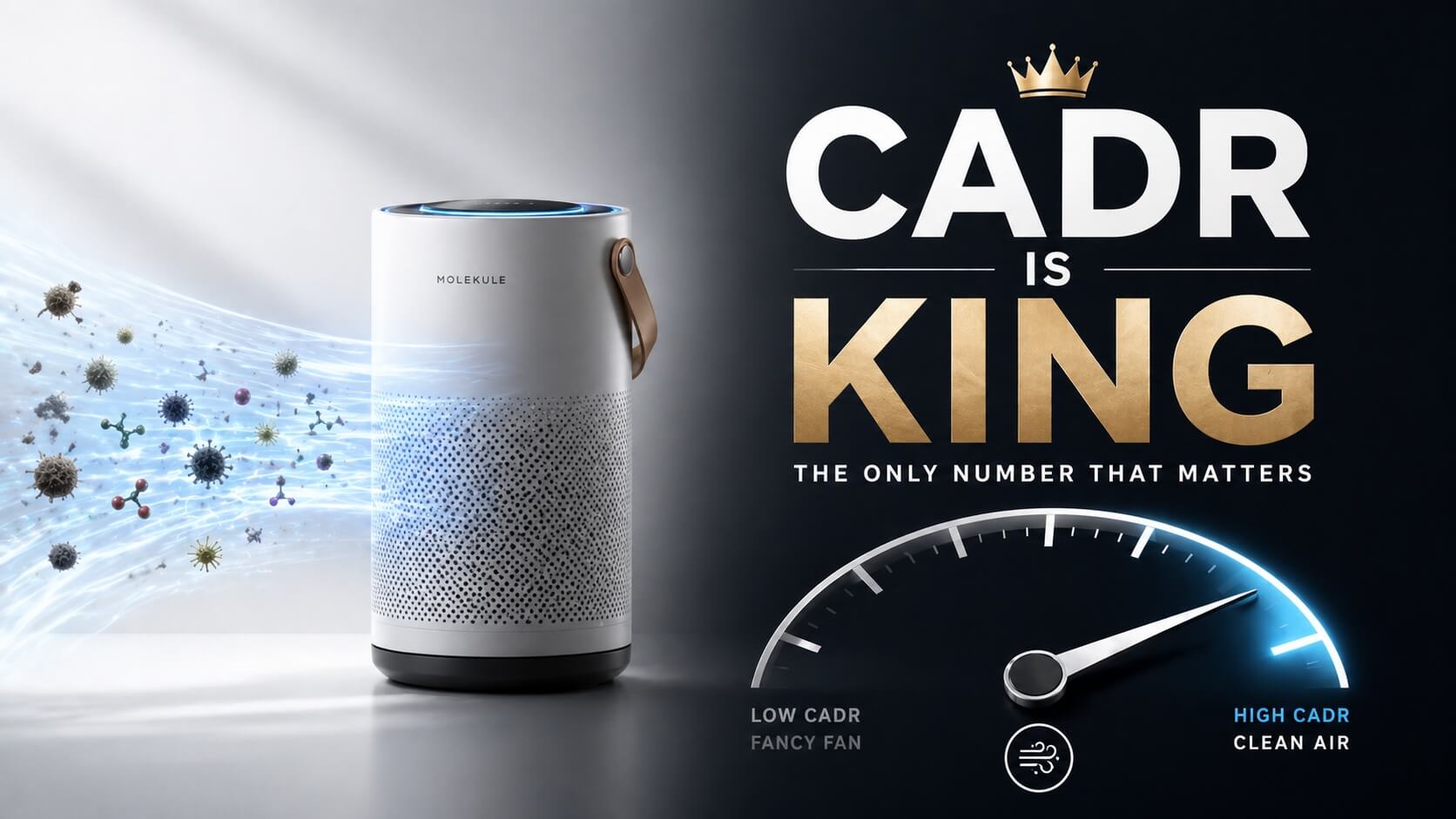
Clean Air Delivery Rate (CADR) is the stat. Not one of many — the one. It tells you how much air your purifier can clean per minute when it’s going full throttle. Bigger number = more clean air = happier lungs.
Here’s the quick sanity check:
Your CADR should be at least ⅔ of your room size.
Got a 300 sq ft room? You want a CADR of 200 or higher.
Anything less is basically a fancy fan with commitment issues.
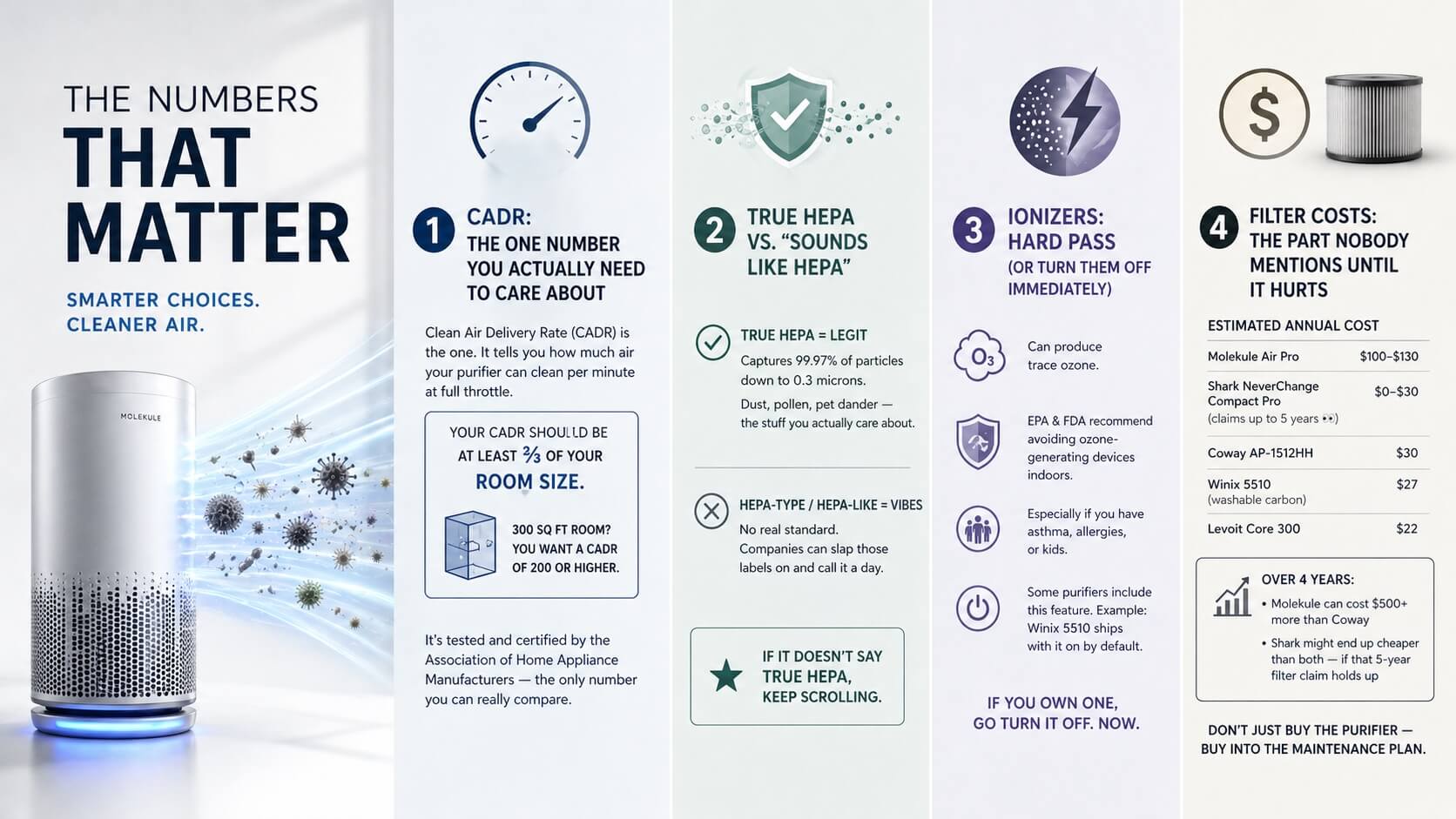
The reason this number matters so much? It’s tested and certified by the Association of Home Appliance Manufacturers — which means it’s one of the only specs you can actually compare across brands without getting bamboozled.
True HEPA vs. “Sounds Like HEPA”
Let’s translate the marketing:
- True HEPA = legit
- HEPA-type / HEPA-like = vibes
True HEPA means the filter captures 99.97% of particles down to 0.3 microns. That’s dust, pollen, pet dander — the stuff you actually care about.
Everything else? No real standard. Companies can slap those labels on and call it a day.
Some brands go even further. For example, Shark’s “Anti-Allergen NanoSeal” claims 99.98% at even smaller particles (0.1–0.2 microns). Cool — but the key takeaway is simple:
If it doesn’t say True HEPA, keep scrolling.
Ionizers: Hard Pass (or Turn Them Off Immediately)
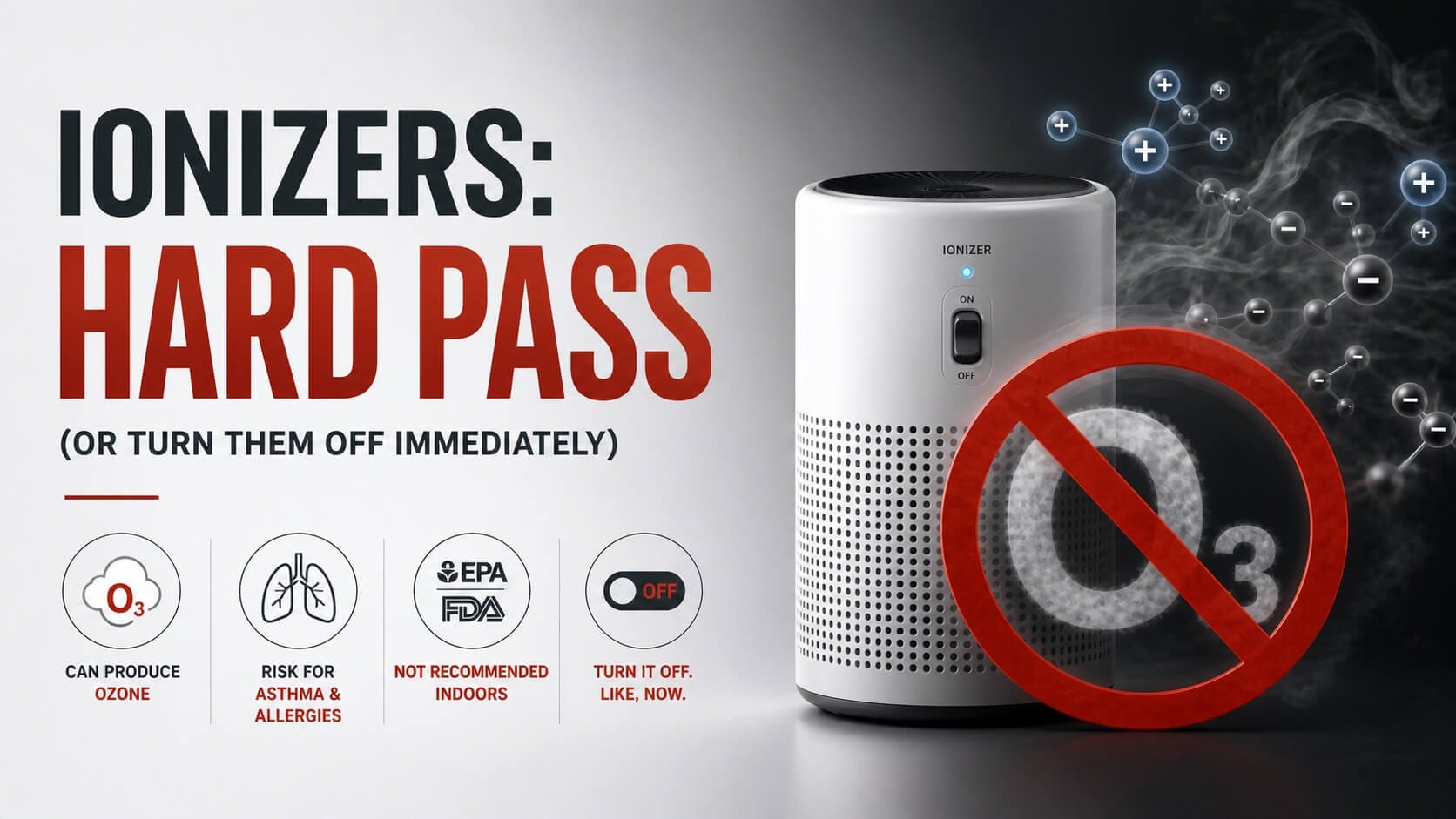
Ionizers sound futuristic. Like something Tony Stark would install in his penthouse.
Reality check: they can produce trace ozone.
That’s not a feature — that’s a side effect you don’t want in your living room.
Both the Environmental Protection Agency and the Food and Drug Administration recommend avoiding ozone-generating devices indoors — especially if you’ve got asthma, allergies, or kids running around.
Some purifiers sneak this feature in anyway. Example: the Winix 5510 ships with it on by default.
If you already own one, go flip that switch off. Like, now.
Filter Costs: The Part Nobody Mentions Until It Hurts
That shiny purifier price? That’s just your cover charge. The real cost shows up later — filters.
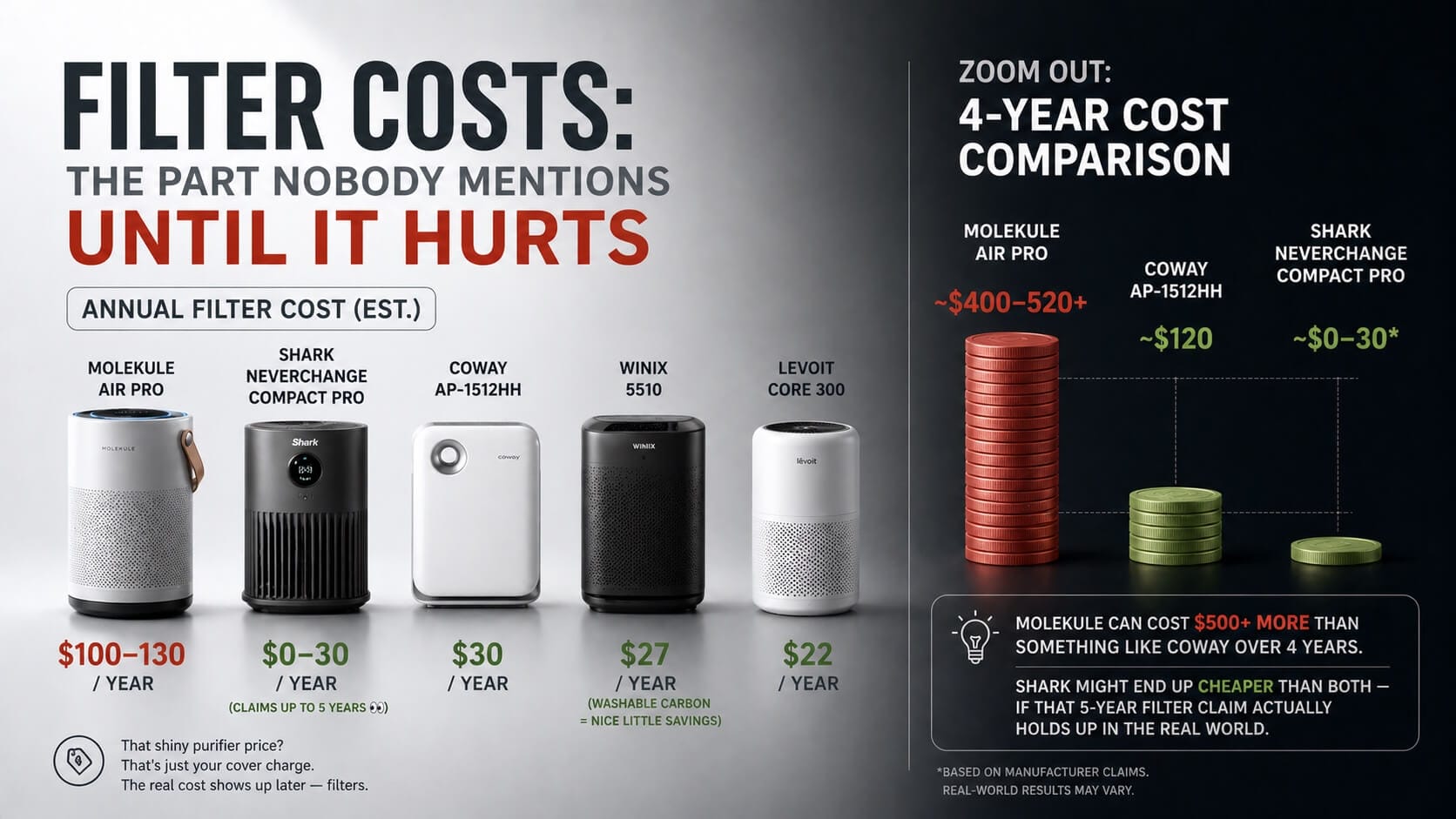
Here’s what you’re looking at annually:
- Molekule Air Pro: ~$100–$130/year
- Shark NeverChange Compact Pro: ~$0–$30/year (claims up to 5 years 👀)
- Coway AP-1512HH: ~$30/year
- Winix 5510: ~$27/year (washable carbon = nice little savings)
- Levoit Core 300: ~$22/year
Now zoom out for a second…
Over 4 years:
- Molekule can cost $500+ more than something like Coway
- Shark might end up cheaper than both — if that 5-year filter claim actually holds up in the real world
Moral of the story:
Don’t just buy the purifier — buy into the maintenance plan whether you like it or not.
Who Else WeTried.it Recommends Checking
If you’re upgrading your home environment more broadly, we’ve tested and reviewed a number of related products that work well alongside an air purifier:
- For sleep: Best Sleep Technology (2026) and our Eight Sleep Pod 5 Review
- For home scent: Is Pura Worth It? and the best Pura alternatives
- For a deeper look at our top pick: Read our full Molekule Air Pro review
- For general home upgrades: our best grocery delivery roundup and Ninja CREAMi review
Frequently Asked Questions
What is the best air purifier in 2026?
The Molekule Air Pro is our top pick for best air purifier in 2026. Its PECO-HEPA Tri-Power filtration goes beyond standard HEPA to destroy pollutants at a molecular level — including VOCs, mold, and ultrafine particles. It covers up to 1,000 sq ft, offers real-time PM1.0/PM2.5/PM10 monitoring, and outperformed every other unit in our 30-day real-world test. For budget-conscious buyers, the Coway AP-1512HH Mighty remains the best value at $89.99.
How much should I spend on an air purifier?
You can get excellent HEPA filtration for $90–$200. The Coway AP-1512HH at $89.99 and the Shark NeverChange Compact Pro at $139.99 both outperform their price points. Spending $500+ (like the Molekule Air Pro at ~$799) buys you PECO technology that destroys VOCs and ultrafine particles — a meaningful upgrade for allergy and asthma households, but not necessary for most people.
Do air purifiers actually work?
Yes — when properly sized for the room. In our 30-day testing, every purifier we tested reduced PM2.5 particle counts by 85–95% within 30 minutes at full speed. The Molekule Air Pro was fastest in our 450 sq ft living room test: PM2.5 from 45 µg/m³ to under 3 µg/m³ in 22 minutes. The EPA confirms HEPA filters capture 99.97% of particles 0.3 microns and larger.
How often do I need to replace the filter?
For most purifiers, the HEPA filter lasts 12 months and the carbon filter lasts 6 months under typical use. The Shark NeverChange is a notable exception — its filter is rated for up to 5 years, which could significantly reduce long-term ownership costs. The unit’s filter indicator light is more reliable than a calendar — don’t replace early, but don’t ignore the light.
Are air purifiers safe to run all night?
Yes, with one caveat: turn off the ionizer if your purifier has one. Air purifiers with True HEPA and activated carbon filters are completely safe to run 24/7. Ionizers, marketed as “PlasmaWave” or “Ionizer” features, generate trace ozone that can irritate airways — disable these before sleeping. The Molekule Air Pro uses PECO technology that does not generate ozone.
What’s the difference between PECO and HEPA?
True HEPA filtration captures 99.97% of airborne particles 0.3 microns or larger by trapping them in a fiber mesh. PECO (Photo Electrochemical Oxidation) uses UV light and a catalytic coating to break down pollutants at a molecular level — including VOCs, mold, bacteria, and ultrafine particles below the HEPA threshold. The Molekule Air Pro uses both PECO and HEPA in tandem, providing a level of purification that HEPA-only units can’t match for VOC and ultrafine particle removal.
Can an air purifier help with wildfire smoke?
Yes — and smoke is one of the best use cases. Wildfire smoke consists primarily of PM2.5 particles that True HEPA and NanoSeal filters capture extremely effectively. The Coway’s smoke CADR of 233 means it clears 233 cubic feet of smoke-contaminated air per minute. For wildfire events, size up: run your purifier at high speed in the room you’re occupying and keep windows and doors closed. The Molekule Air Pro’s PECO technology also breaks down the VOCs in smoke that HEPA-only units leave behind.
Is the Shark NeverChange filter really worth 5 years?
It’s a compelling claim with solid technology behind it — the Anti-Allergen NanoSeal material is more durable than standard HEPA fiber. In our 30-day test, performance didn’t degrade. However, real-world longevity depends heavily on use conditions: a pet household or high-pollution environment will likely see shorter filter life than the lab-condition 5-year estimate. Still, even 2–3 years without a filter change is significantly better than the annual replacement every other unit on this list requires.
What is the best air purifier for a small apartment or bedroom in 2026?
For rooms under 400 sq ft, the Levoit Core 300 is our top pick — it’s $99, whisper-quiet on low settings (24 dB), and runs a 3-stage filtration (pre-filter + True HEPA + activated carbon) that handles dust, pet dander, pollen, and VOCs. In a bedroom context, the Core 300’s nighttime mode (auto-dims the display, caps the fan speed) makes it genuinely liveable for light sleepers. The Coway AP-1512HH covers larger bedrooms (up to 360 sq ft clean air delivery) if you need more coverage. Both are dramatically cheaper than the Molekule but handle 95%+ of what most people need an air purifier to do.
Winix 5510 vs Winix 5500-2: What’s the difference?
The Winix 5510 (our pick for pet owners) replaced the Winix 5500-2 as the current model. The key differences: the 5510 has a washable pre-filter where the 5500-2 required replacing it, the 5510’s CADR ratings are slightly higher (Dust: 243, Pollen: 246, Smoke: 232 CFM), and the 5510 includes a carbon filter that’s 30% larger. If you find the 5500-2 on sale for significantly less, it’s still a great buy — the core performance is nearly identical. For current models, the 5510 is the better spec at similar pricing.