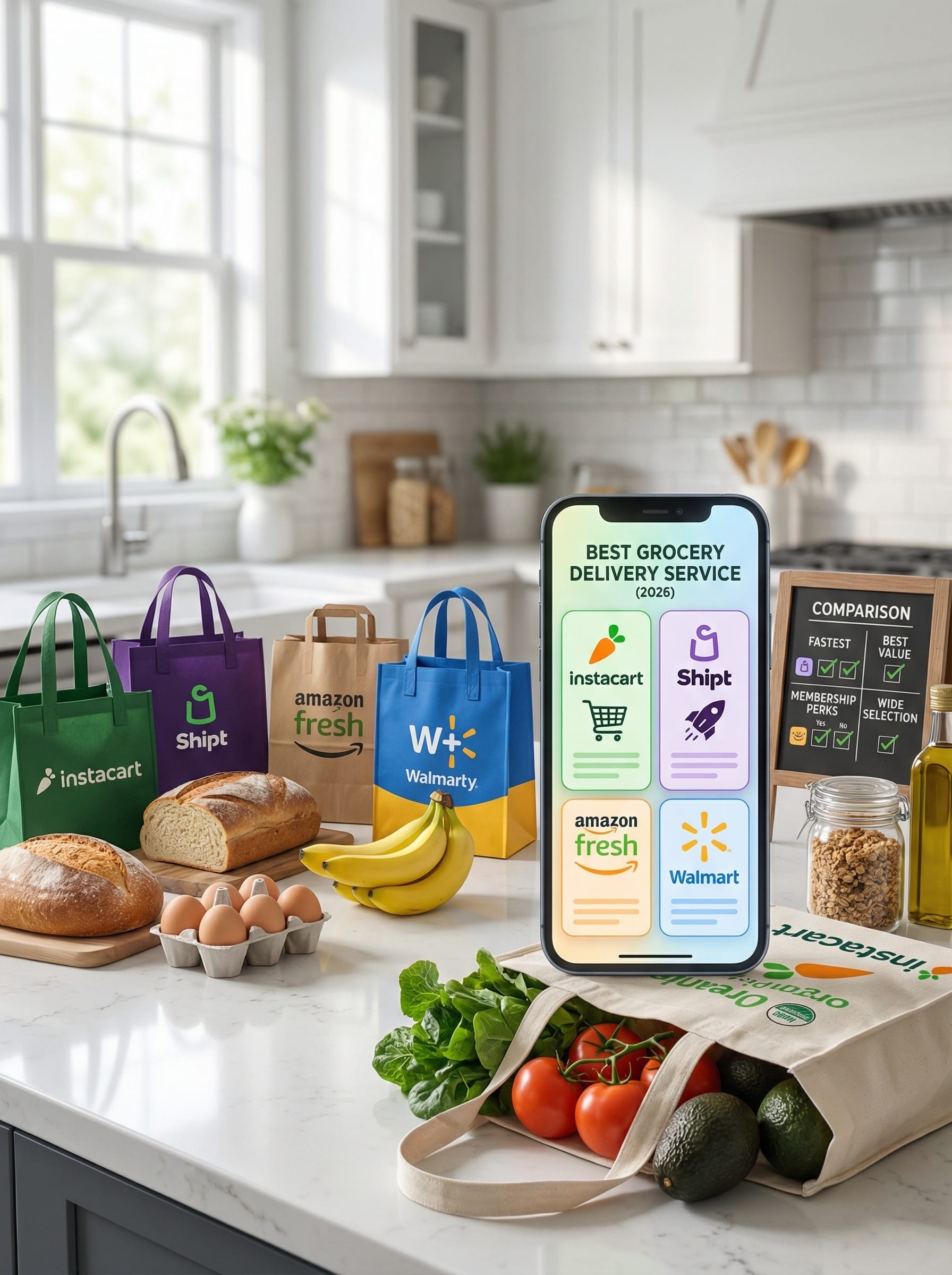

TL;DR — Shipt wins for speed and pricing if you have Target/Kroger nearby; Instacart has wider store coverage; Amazon Fresh/Walmart are cheapest. Real-family testing beat a year of actual grocery bills.

We’ve used every major grocery delivery service consistently for over a year — tracking prices, delivery accuracy, substitution rates, and the real total costs including fees, tips, and membership. Not sponsored tests. Not week-long trials. Actual grocery shopping, for an actual family, with real money on the line.
The bottom line: the “best” service depends almost entirely on which stores are in your area and how much you value your time. For most people, Shipt is our top pick — same-day delivery from Target, Kroger, and Meijer at the same in-store prices (no markup). If those stores aren’t in your area, Instacart has the widest coverage. For price-conscious shoppers, Amazon Fresh or Walmart Delivery often wins on total cost.
Quick answer: Shipt if you shop at Target, Kroger, or Meijer — same in-store prices, no markup, $99/yr membership. Instacart if you need maximum store coverage. Amazon Fresh if you’re already a Prime member. Walmart+ if price is your #1 priority.
Our Top Picks at a Glance
| Service | Best For | Annual Cost | Our Rating |
|---|---|---|---|
| Shipt ⭐ Our Pick | Same Target prices — no markup | $99/yr | ⭐⭐⭐⭐⭐ |
| Instacart | Widest store coverage, same-day | $99/yr (Instacart+) | ⭐⭐⭐⭐½ |
| Amazon Fresh | Prime members, Whole Foods quality | Included w/ Prime | ⭐⭐⭐⭐ |
| Walmart+ | Lowest prices, broad selection | $98/yr | ⭐⭐⭐⭐ |
Instacart — Best for Store Flexibility

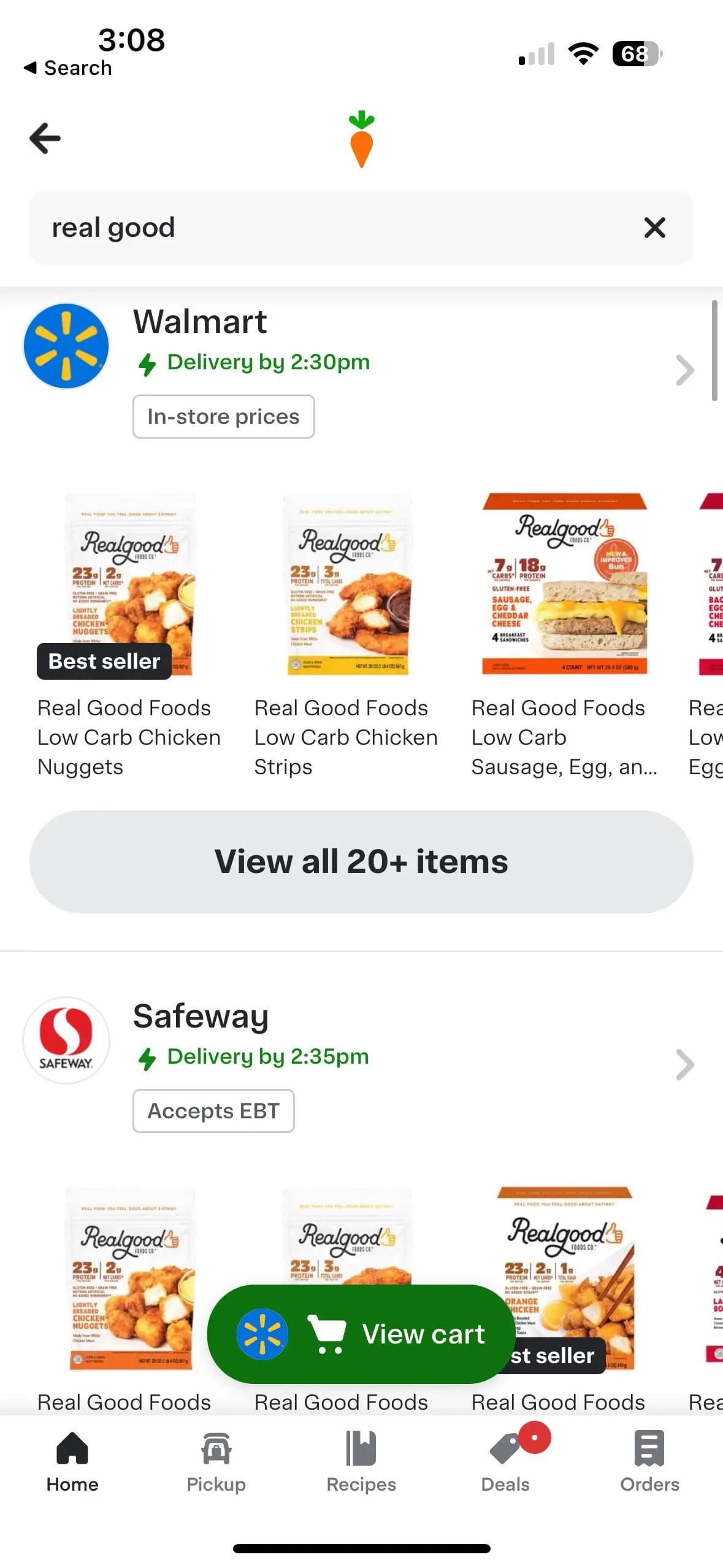
Instacart is the big flexible network play. It doesn’t own any stores — it just plugs into hundreds of them. Kroger, Costco, Aldi, Whole Foods, Publix, Wegmans, Sprouts, Petco, CVS. The list goes on. If you shop at three different stores depending on what you need, Instacart can cover all of them from one app.
How we tested it: We used Instacart as our primary delivery service for four months across Kroger, Costco, and a local natural grocery. We tracked our total spend, compared it to what the same cart would have cost in-store, and kept notes on substitution quality and delivery accuracy.

What we liked:
- Genuinely unmatched store coverage — works in major metros and mid-sized cities alike
- True same-day delivery, often with 1–2 hour windows available
- Real-time chat with your shopper to approve or reject substitutions before they grab the wrong thing
- Instacart+ members get free delivery on orders $35+ with no per-delivery fee
- Express pickup option available at many stores with zero extra fees
What we didn’t:
- Instacart marks up prices at most stores — your $4 yogurt can quietly become $4.79 without you noticing
- Service fees, delivery fees, and tips add up fast without a membership
- Substitution quality varies wildly by shopper — we’ve gotten both genius swaps and genuinely baffling ones
- Peak-hour availability can be spotty in less dense areas
Pricing breakdown:
- No membership: $3.99–$7.99 delivery fee + 5% service fee per order
- Instacart+ ($99/yr or $9.99/mo): free delivery on $35+ orders, reduced service fees
- Tip: $5–7 per order is typical
- Price markup vs. in-store: 5–15% at most stores (varies)
- Real annual extra cost with membership, 2 orders/week: ~$500–700 over in-store prices
Who it’s for: Anyone who shops at multiple different stores, needs same-day delivery, or lives somewhere that only Instacart covers. The flexibility is the whole point.
Shipt — Best Overall (Our Top Pick)
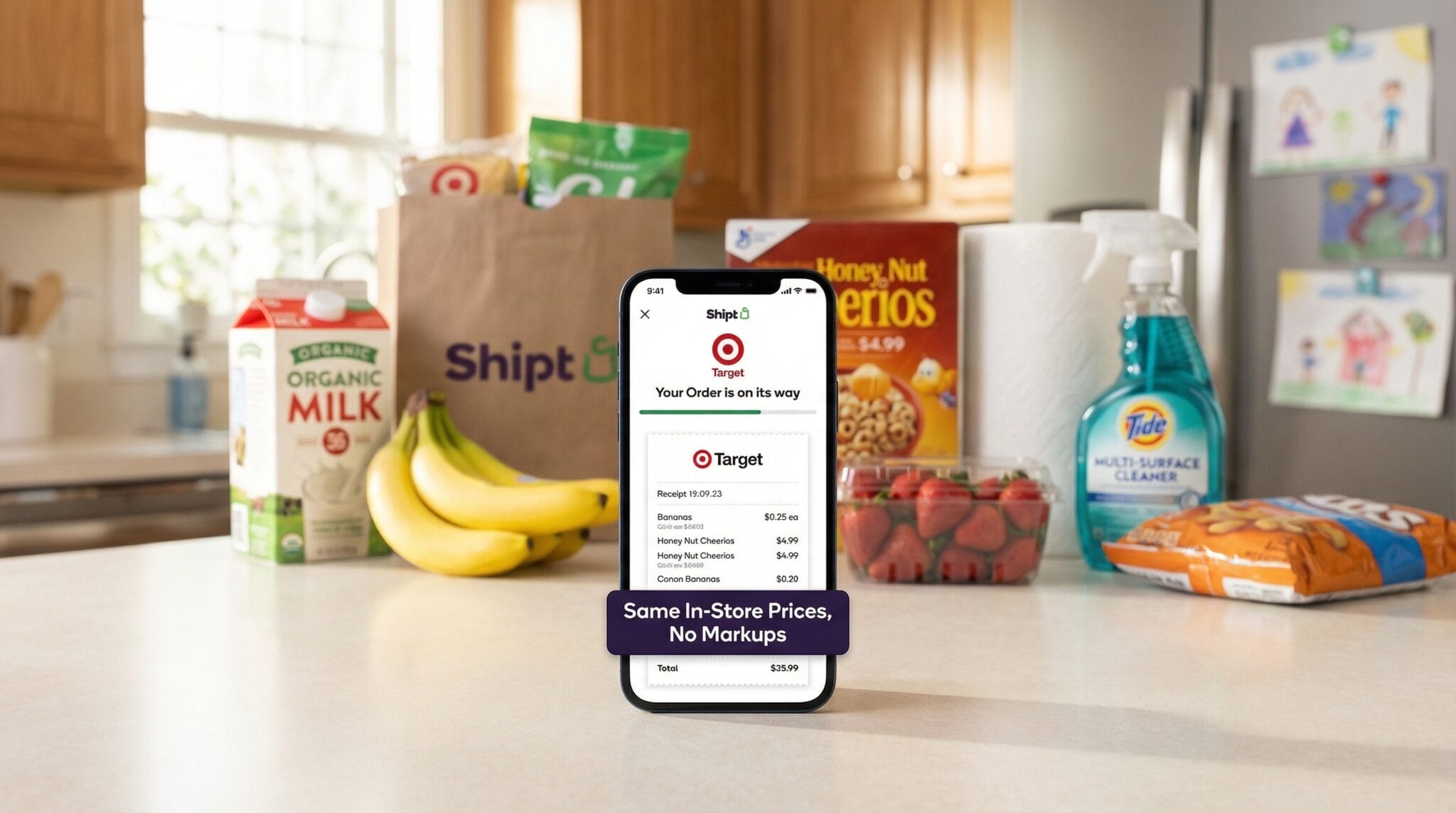
Shipt is what we actually use most often, and the reason is simple: no price markup. When you order from Target through Shipt, you pay exactly what you’d pay in the Target store. Same price on every item. No silent inflation at checkout.
Target acquired Shipt back in 2017, which is why the Target integration is seamless. But Shipt also covers Kroger, Meijer, Costco, H-E-B, Petco, and a handful of others depending on your market.

How we tested it: We ran Shipt as our primary service for five months, doing 1–2 orders per week mostly from Target and Kroger. We compared our Shipt receipts to Target’s actual shelf prices to verify the no-markup claim (it checks out) and tracked delivery times and substitution rates.
What we liked:
- Zero price markup at Target — what you see is what you pay, period
- Shoppers tend to be communicative and reliable; we rarely got substitutions we didn’t approve
- Same-day delivery is fast — 1–2 hour windows are common
- $99/yr membership covers unlimited deliveries on orders $35+
- Works especially well if Target is your main grocery store (and for a lot of families, it is)
What we didn’t:
- Store coverage is narrower than Instacart — if your preferred stores aren’t on Shipt, this service isn’t for you
- Non-Target stores sometimes do have minor price differences
- The app is functional but not the most polished experience
- Availability in rural areas is hit or miss
Pricing breakdown:
- No membership: $7–10 delivery fee per order
- Shipt membership: $99/yr or $10.99/mo — free delivery on orders $35+
- Tip: $5–7 per order is standard
- Price markup: zero at Target; small markup possible at some partner stores
- Real annual extra cost with membership, 2 orders/week: ~$600–800 (mostly tips) — but you’re paying actual Target prices
Who it’s for: Target regulars, Kroger shoppers, and anyone who hates paying markup on groceries. If Target carries 80% of what your family buys, Shipt is the cleanest option on the market.
Amazon Fresh — Best for Prime Members

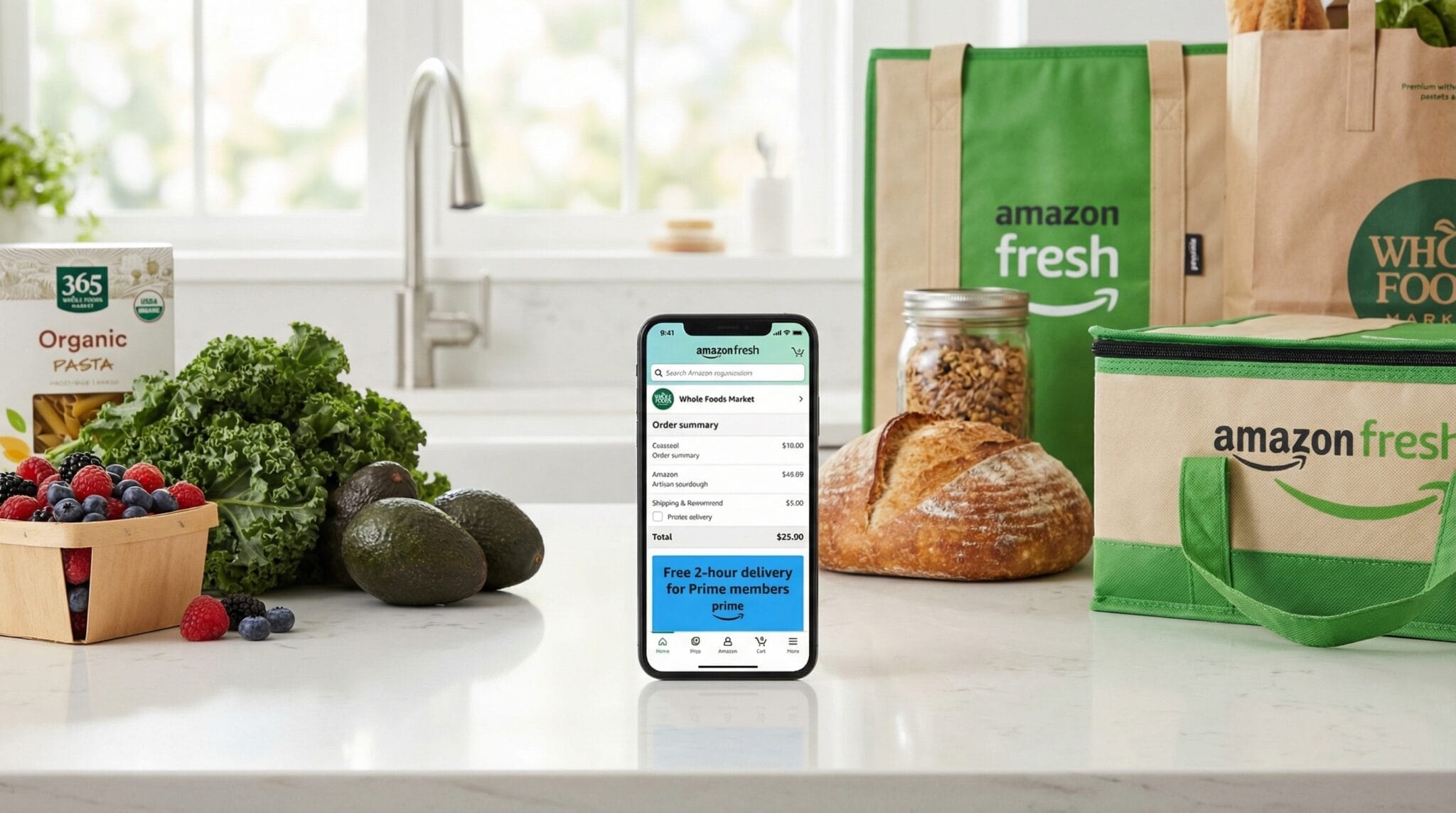
Amazon Fresh is Amazon’s grocery play, and if you already pay for Prime, it effectively costs you nothing extra for delivery. You get two things: the Amazon Fresh store (Amazon’s own grocery brand, available in major markets) and Whole Foods delivery, which is where the quality reputation comes from.
The execution is classic Amazon — the tech is excellent, the reliability is high, and the Whole Foods produce quality is genuinely better than most of the competition.
How we tested it: We used Amazon Fresh for Whole Foods orders weekly for three months. We tested delivery windows, produce freshness, and how their substitution handling worked. We also tried the Amazon Fresh store (not Whole Foods) to compare the value proposition.
What we liked:
- Whole Foods delivery quality is genuinely excellent — produce arrives fresh, items are rarely wrong
- Already included with Amazon Prime ($139/yr) — no separate membership needed
- The app experience is the best in class — clean, reliable, easy to reorder
- Same-day and next-day windows are almost always available in major metros
- Alexa integration if you’re into that sort of thing
What we didn’t:
- Amazon Fresh stores aren’t available in all markets — coverage is still limited compared to Instacart
- Whole Foods is pricier than Walmart or Kroger by definition — you’re paying premium-store prices
- Minimum order for free delivery ($150 for Fresh, $35 for Whole Foods) can feel restrictive
- No-tip model (Amazon handles their own workers differently) means less shopper incentive to go above and beyond
Pricing breakdown:
- Whole Foods delivery: free with Prime on orders $35+ (some markets charge $9.95 below threshold)
- Amazon Fresh store: free delivery on orders $150+ for Prime members; $9.95 for $100–149; $6.95 for $50–99
- Amazon Prime: $139/yr (required)
- No tipping — Amazon delivery workers are W-2 employees, not contractors
- If you already have Prime: best value-per-delivery ratio in the category
Who it’s for: Prime members who live near Whole Foods or an Amazon Fresh store and want reliable, high-quality delivery without thinking about it. If you’re already in the Amazon ecosystem, this is a no-brainer.
Walmart+ Delivery — Best for Price-Sensitive Shoppers


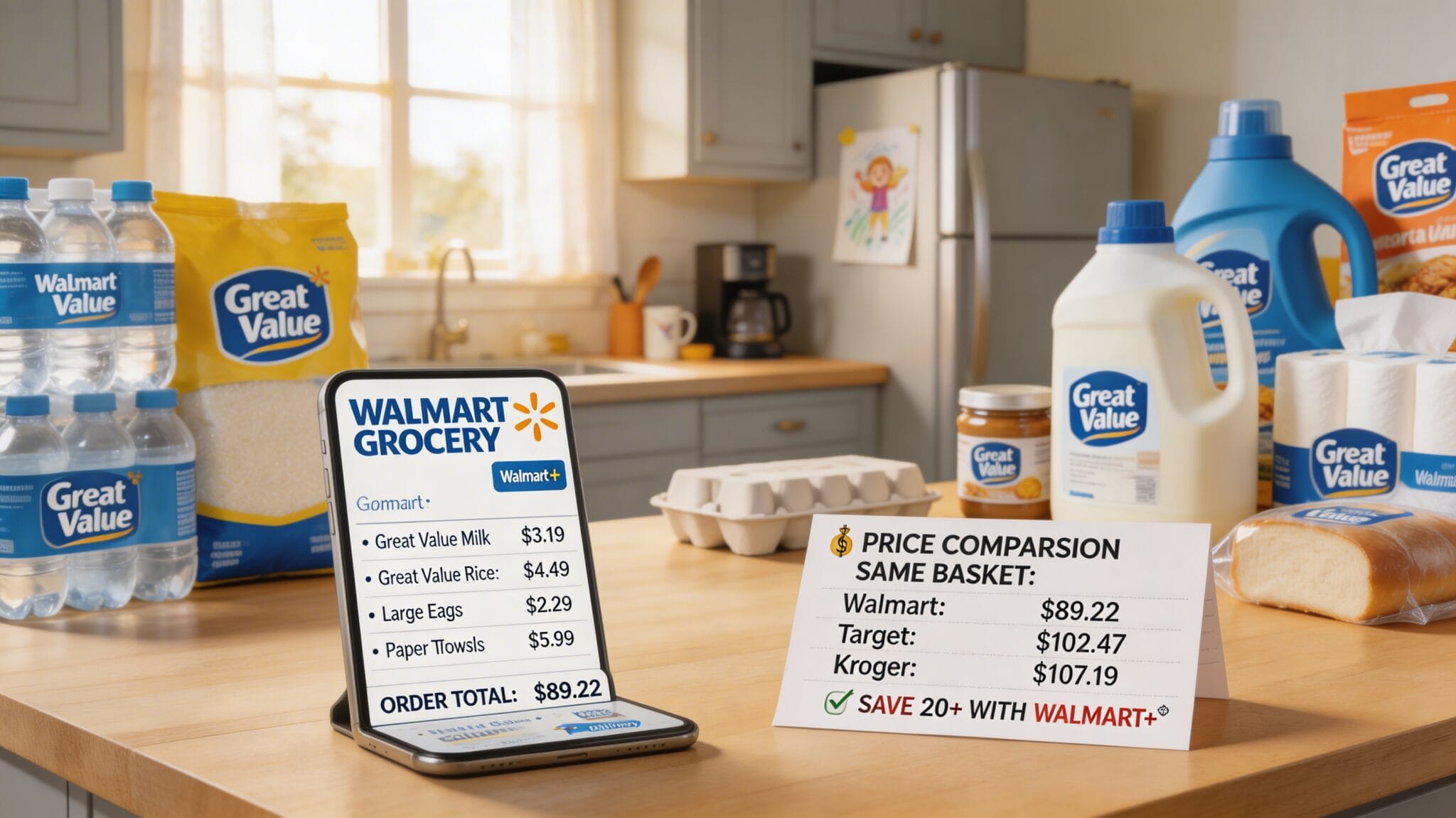
Walmart is the price leader in American grocery retail, and Walmart+ delivery brings that pricing advantage to your door. The $98/year membership gets you free unlimited grocery delivery — and because it’s actual Walmart prices, you’re often spending less per cart than you would at Kroger or Target even before factoring in delivery fees.
The membership also throws in a Paramount+ subscription, Walmart’s in-store Scan & Go feature, and fuel discounts — so the value stacks if you actually use those things.
How we tested it: We ran Walmart+ for four months doing weekly grocery runs. We compared the same cart across Walmart, Kroger (via Instacart), and Target (via Shipt) to nail down real cost differences. We also tracked substitution quality and delivery window reliability.
What we liked:
- Walmart’s prices genuinely beat competitors on staples — milk, eggs, bread, snacks, basics
- Massive selection — Walmart carries nearly everything under one roof
- $98/yr membership is slightly cheaper than Instacart+ ($99) with comparable coverage
- Consistent delivery — Walmart’s logistics operation is serious
- Bonus perks (Paramount+, fuel discounts) add real value if you use them
What we didn’t:
- Produce quality is inconsistent — and highly location-dependent. Some stores are great. Others are not.
- Delivery windows aren’t always same-day; popular slots book out fast
- The app UX lags behind Amazon and Instacart — it works, but it’s clunkier
- Substitutions can be a gamble — less real-time communication than Instacart
Pricing breakdown:
- No membership: $7.95–$9.95 delivery fee per order
- Walmart+ membership: $98/yr or $12.95/mo — free unlimited delivery on $35+ orders
- Tip: standard $5–7 per order
- No price markup — you pay Walmart.com prices (same as in-store)
- Real annual extra cost with membership, 2 orders/week: ~$500–700 (tips) — at already-lower Walmart prices
Who it’s for: Budget-conscious households, families buying in bulk, and anyone who doesn’t have strong preferences about store brand or premium produce. If saving money is your primary goal, Walmart+ is the honest pick.
Head-to-Head Comparison
Here’s how all four look side by side on the things that actually matter:
| Category | Instacart | Shipt | Amazon Fresh | Walmart+ |
|---|---|---|---|---|
| Membership price | $99/yr | $99/yr | Included w/ Prime ($139/yr) | $98/yr |
| Price markup? | Yes, 5–15% | None at Target | None (Whole Foods prices) | None |
| Store selection | ⭐⭐⭐⭐⭐ (widest) | ⭐⭐⭐ (Target-focused) | ⭐⭐ (Fresh + WF only) | ⭐⭐⭐ (Walmart only) |
| Same-day speed | ⭐⭐⭐⭐⭐ | ⭐⭐⭐⭐⭐ | ⭐⭐⭐⭐ | ⭐⭐⭐⭐ |
| App experience | ⭐⭐⭐⭐ | ⭐⭐⭐ | ⭐⭐⭐⭐⭐ | ⭐⭐⭐ |
| Tipping required? | Yes | Yes | No | Yes |
| Produce quality | Variable | Variable | Excellent (Whole Foods) | Inconsistent |
| Best for | Flexibility | Target regulars | Prime members | Budget shoppers |
The tipping question is worth calling out: Amazon Fresh is the only service where you don’t tip, because their delivery workers are employees, not gig contractors. That saves $5–7 per order — which adds up to $500+ per year if you order twice a week. It’s a meaningful structural difference, not a small footnote.
What Others Are Saying
We went through r/Frugal, r/personalfinance, and r/mealplanning to see what real users say after months of use — not just first impressions. Here’s what keeps coming up:
Instacart
| What they love | What they complain about |
|---|---|
| “Only service that covers my local Kroger AND Costco same-day” | “The markup adds up — I did the math and I’m paying 10–12% more than in-store prices” |
| “Shoppers have been really communicative, good substitutions” | “Instacart+ isn’t really ‘free delivery’ — you still pay service fees and tips” |
| “Saved the week more times than I can count when I forgot something” | “The ‘heavy order’ fee on Costco orders is ridiculous” |
Shipt
| What they love | What they complain about |
|---|---|
| “Target prices, delivered. No games. I verified this myself.” | “Coverage is the weak point — only works if your stores are on it” |
| “Shoppers are better than Instacart on average in my area” | “App needs work — harder to navigate than Amazon or Instacart” |
| “My Target membership already paid for itself in saved trips” | “Delivery windows disappear fast in my suburb” |
Amazon Fresh / Whole Foods
| What they love | What they complain about |
|---|---|
| “Already paying for Prime — basically free delivery from Whole Foods” | “Not available in my city yet. Jealous of people who have it.” |
| “Most consistent produce quality of any delivery service I’ve used” | “Amazon Fresh store minimum for free delivery is annoying ($150)” |
| “Amazon knows what I order. Reordering takes 30 seconds.” | “Whole Foods prices are Whole Foods prices. Good quality but not cheap.” |
Walmart+
| What they love | What they complain about |
|---|---|
| “Cheapest per-item prices, hands down. I compared everything.” | “My Walmart’s produce is hit or miss. Some weeks great, some weeks trash.” |
| “No markup means I’m actually saving money over in-store if you count gas” | “App is clunky. Finding items is harder than it should be.” |
| “Paramount+ bundle made it a no-brainer upgrade from just free delivery” | “Delivery slots fill up fast. Same-day isn’t always possible.” |
The honest Reddit consensus: Instacart for flexibility, Shipt for Target regulars, Amazon Fresh if you’re already Prime, Walmart+ if price is your primary filter. Which is basically what we concluded after testing ourselves — it’s good to know real users land in the same place.
Buyer’s Guide: Which Service Should You Get?
Here’s the cleaner version of the decision tree:
Get Shipt if: You shop at Target regularly, and the idea of paying Target prices (no markup) for home delivery sounds good. It’s our pick precisely because the no-markup model means you’re not slowly bleeding extra money every week.
Get Instacart if: You shop at multiple stores, you’re loyal to a specific local chain that isn’t covered by the others, or you want same-day availability from the widest possible network. The markup is real, but the flexibility is real too.
Get Amazon Fresh if: You already pay for Prime and you live near a Whole Foods or Amazon Fresh store. The math is basically unbeatable — you’re already paying for Prime, so delivery is free, the app is excellent, and Whole Foods produce quality is genuinely good.
Get Walmart+ if: Price is your primary driver, full stop. Walmart’s prices on staples are hard to beat anywhere, and the no-markup delivery at $98/year is a solid deal. The app and produce quality aren’t best in class, but the savings are real.
Skip it entirely if: You genuinely enjoy grocery shopping, you have flexible time, and you’re near good stores. No delivery service saves money compared to driving yourself — the value is in the time and convenience, not the economics. If those don’t matter to you, don’t bother.
The honest math question
Before committing to any grocery delivery membership, do the actual math:
- Your time value × hours saved per week shopping
- vs. membership cost + delivery fees + tips + any price markup
For most busy households with kids, the math works out. For retirees or people with flexible schedules who actually enjoy the ritual of shopping? It often doesn’t. Be honest with yourself about which camp you’re in before signing up for anything.
⭐ Our Top Pick: Shipt
For most families, Shipt is our top recommendation — same in-store prices (no markup), reliable same-day delivery, and a membership that pays for itself fast if you’re shopping at Target, Kroger, or Meijer. At $99/year it’s the best value in grocery delivery for families who shop regularly.
Frequently Asked Questions
Is Instacart worth the membership?
If you order 2+ times per month, Instacart+ pays for itself in waived delivery fees. The store coverage and same-day availability are worth it for most households — but remember you’re still paying a price markup on items and tipping your shopper.
Is Amazon Fresh free with Prime?
Whole Foods delivery is included with Amazon Prime on orders $35+ in eligible areas. Amazon Fresh store delivery requires larger order minimums for free delivery ($150). No separate membership needed beyond Prime.
Which grocery delivery service has the freshest produce?
Amazon Fresh (from Whole Foods) is consistently the best for produce quality. Shipt from Target is solid. Walmart and Instacart are more variable — your mileage will depend heavily on your local store and which shopper you get.
Can you do grocery delivery without a subscription?
Yes — all services offer pay-per-order delivery, but fees add up fast ($5–10 per delivery, plus tip). The memberships pay for themselves after 1–2 orders per month for most people.
Instacart vs. Shipt: Which is better?
Instacart wins on store coverage. Shipt wins for Target and Kroger customers because there’s no price markup. If you shop at Target regularly, Shipt’s the better deal almost every time.
What grocery delivery is available in my area?
Availability varies significantly by market. Instacart has the widest geographic coverage. Amazon Fresh is limited to major metro areas. Check each service’s website with your zip code before committing to a membership.