

TL;DR — Genuinely great product. If the price works for your budget, buy it. We're still using ours.
We were on the search for some easy summer shoes to wear to the pool. We love our Rainbow Sandals, but they can be a little slow to dry and feel weird when wet. We tried Native Shoes – the Miles Water Shoe for Mr. WeTriedIt and the Jefferson Slip-On Sneaker for the almost two-year-old. This summer has already been full of pool trips — at least one trip a day. So finding the right pool shoes is critical.

First Impressions
First of all, the men’s shoe looks more like a casual shoe than any other water shoe we’ve seen. Most water shoes look like something an astronaut would reject. These actually look like sneakers — you could wear them to a casual lunch without anyone knowing they’re water shoes.
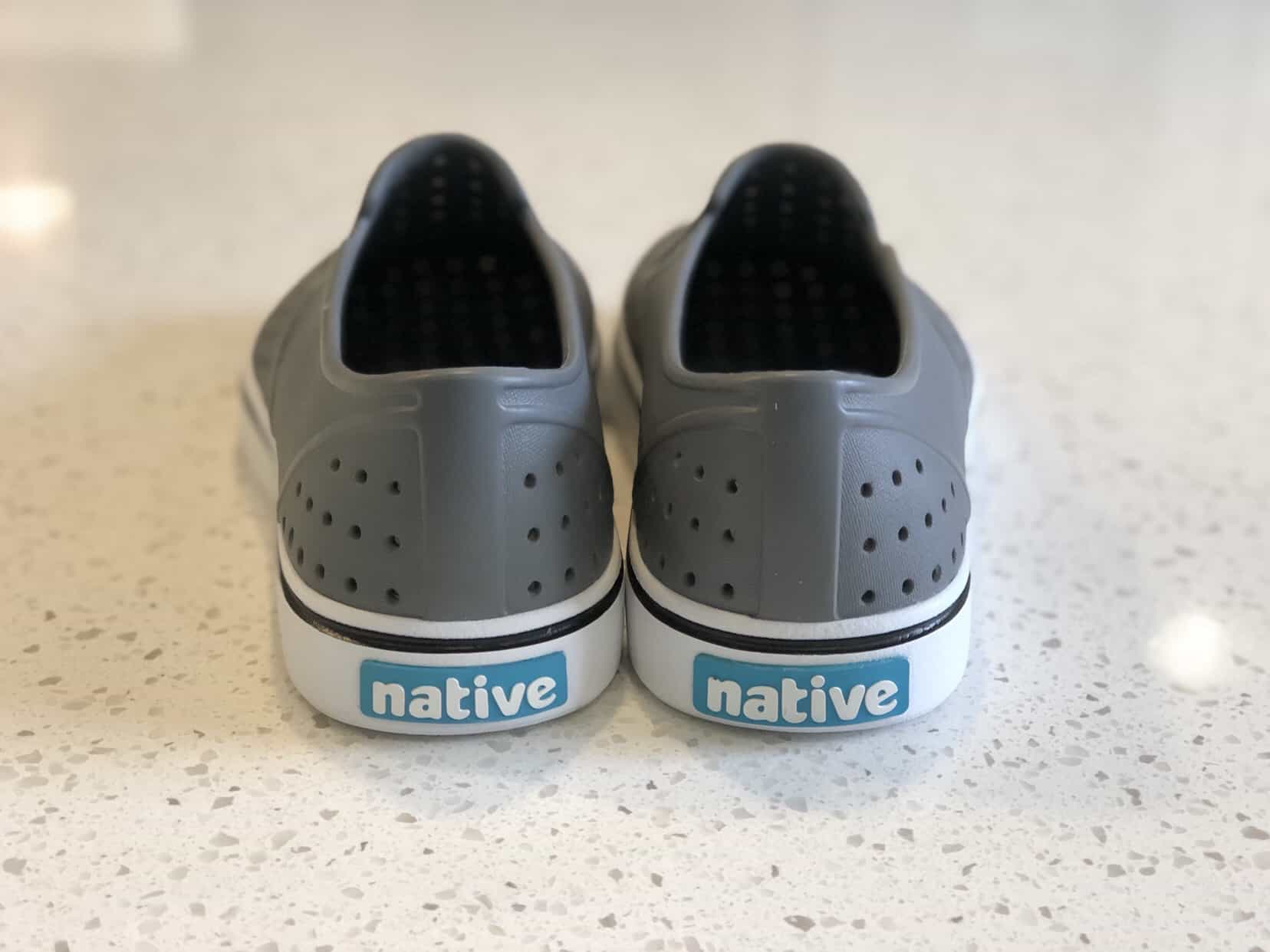
However, they are made of a material that feels like the ugly but oh-so-comfortable Crocs that everyone loves to hate. They also have little holes in the upper to help your feet breathe. Here’s a closer look:

The Material: What Are Native Shoes Made Of?
EVA, or Ethylene Vinyl Acetate, is the primary material used in Native Shoes, known for its flexibility, durability, and water-resistant properties. This lightweight material not only offers comfort but also ensures the shoes maintain their shape over time, making them ideal for regular water exposure.
If you’ve ever held a Croc, you know the feel — it’s that slightly squishy, rubbery material that’s incredibly light. Native Shoes uses a similar compound but shapes it into much more stylish silhouettes. The Miles model (what we got for dad) looks like a modern slip-on sneaker, while the Jefferson (the kids’ version) looks like a classic sneaker with a perforated upper.
The perforations serve a real purpose: water drains out quickly when you step out of the pool, and your feet get airflow to dry faster. On a hot summer day, the ventilation is genuinely nice. You don’t get that swampy, trapped-heat feeling you get with closed-toe shoes.
The Kids’ Shoes
The kid’s Native Shoes look exactly the same, just smaller:
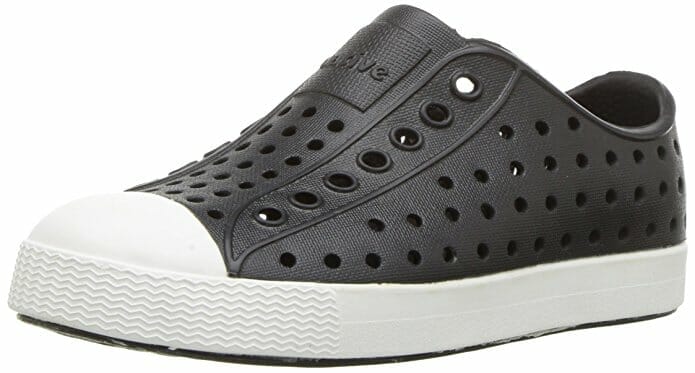
The Jefferson is one of Native’s most popular models, and for good reason. For toddlers and young kids, they’re slip-on (no laces to tie), lightweight enough that kids barely notice they’re wearing them, and wash off easily when they inevitably get covered in mud, sand, or whatever else toddlers find on the ground.
Our toddler took to them immediately — no break-in period, no fussing to put them on. That alone is a win. If you’ve ever tried to wrestle a screaming toddler into stiff shoes before heading to the pool, you understand the value of slip-on simplicity.
The Comfort Question
Here’s where things get complicated. The Native Miles felt great for the first few minutes. Light, cushioned, cool on a hot day. But then we ran into a problem.
Do Native Shoes Run Big or Small?
Overall, these shoes were really comfortable for the first couple of seconds. However, we had the same problem with both the men’s shoe and the kid’s shoe: the width. The shoes felt true to size at first. But after wearing for a couple of minutes it was clear that the width of the shoes was too small — smaller than normal.
This seems to be a common complaint. Looking at reviews on Zappos and Amazon, many people mention that Native Shoes run narrow. The EVA material does have some give, and some reviewers say they stretch out slightly over time, but our experience was that the initial pinching on the sides of the foot (especially around the pinky toe) was uncomfortable enough that extended wear wasn’t enjoyable.
Our sizing recommendation: If you have average or narrow feet, order your normal size. If you have wide feet at all, go up a full size. The length will be slightly long, but the width will be much more comfortable. For kids, same advice — size up if your kid has chubby toddler feet (and most toddlers do).
What We Love About Native Shoes
- The look. Hands down the best-looking water shoes we’ve found. They don’t scream “I’m wearing water shoes.”
- Incredibly lightweight. The Miles weighs almost nothing. You barely feel them on your feet.
- Quick drying. Water drains through the perforations in seconds. A few minutes in the sun and they’re dry.
- Easy to clean. Hose them off, wipe them down, good as new. For kid shoes especially, this is huge.
- Odor-resistant. The EVA material doesn’t absorb odors the way fabric shoes do. After a full summer of pool use, they still smelled fine.
- Tons of color options. Native offers a ridiculous range of colors and patterns. You can match your personality, your outfit, or your kid’s favorite color.
- Kid-friendly design. Slip-on, no laces, lightweight. Perfect for toddlers and young kids who are hard on shoes.
What We Don’t Love About Native Shoes
- The width issue. They run narrow. If you have even slightly wide feet, you’ll feel it. This was a dealbreaker for us on the men’s shoe.
- Not great for long walks. The EVA sole is fine for poolside, running errands, or casual wear. But the cushioning isn’t supportive enough for extended walking or hiking.
- The Croc association. Some people just can’t get past the material. If you hate the feel of Crocs, you’ll feel the same way about these.
- Price. At $50-60 for adult sizes and $35-40 for kids, they’re not cheap for what’s essentially a plastic shoe. You can find basic water shoes for under $20.
- No arch support. The footbed is flat. If you need arch support, you’ll want to add an insole or look elsewhere.
Native Shoes vs. The Competition
Native Shoes vs. Crocs
The obvious comparison. Crocs are cheaper ($30-50), arguably more comfortable out of the box (wider toe box), and have the Jibbitz customization thing going on. But Native Shoes look dramatically better. If aesthetics matter to you, Native wins. If pure comfort and value matter, Crocs might be the move.
Native Shoes vs. Speedo Water Shoes
Speedo makes inexpensive water shoes ($15-25) that work great for the pool and beach. They’re more like water socks with a sole — very different from Native’s sneaker-style approach. Speedo is more functional; Native is more fashionable.
Native Shoes vs. Keen Water Sandals
Keen makes excellent water-friendly sandals with real support and protection. They’re heavier, bulkier, and more expensive, but if you need shoes for hiking near water or serious outdoor activities, Keen is the better choice. For pool days? Native is simpler and lighter.
Native Shoes vs. Allbirds
Different category entirely — Allbirds aren’t water shoes — but worth mentioning since both brands target the casual, minimalist shoe market. If you want everyday comfort shoes, go Allbirds. If you need water-specific shoes that still look casual, go Native.
Sustainability Efforts
Native Shoes is committed to sustainability. The Native Shoes Remix Project is a noteworthy initiative where old shoes are recycled into materials for community projects like playground surfaces and insulation. Their use of environmentally friendly processes and recycled materials in shoe production highlights their dedication to reducing their ecological footprint.
They’ve also introduced plant-based versions of some models using materials derived from natural sources rather than petroleum-based EVA. If sustainability is important to your purchasing decisions, Native is doing more than most shoe brands in this space.
Best Uses for Native Shoes
Based on our testing, here’s where Native Shoes excel:
- Pool days — their sweet spot. Quick on, quick off, fast drying.
- Beach trips — sand washes out easily through the perforations.
- Boat outings — lightweight, non-marking soles, water-friendly.
- Casual summer errands — stylish enough for the grocery store or coffee shop.
- Gardening — easy to hose off, comfortable standing.
- Toddler daily wear — easy for parents, comfortable for kids, survives everything.
Frequently Asked Questions
Do Native Shoes run big or small?
They run true to size in length but narrow in width. If you have wide feet, size up. If your feet are average or narrow, your normal size should work.
Are Native Shoes good for wide feet?
Not really. This was our biggest complaint. The width is noticeably tighter than standard shoes. Wide-footed buyers should try them on in-store before committing, or order a size up.
Can you wear Native Shoes without socks?
Absolutely — that’s how they’re designed to be worn. The EVA material is smooth against skin and doesn’t cause blisters (assuming the width fits you properly).
How do you clean Native Shoes?
Just rinse with water and let air dry. For deeper cleaning, a little soap and a brush will get them looking new. Machine washing is possible but not recommended — hand washing preserves the shape better.
How long do Native Shoes last?
With regular summer use, expect 1-2 seasons from a pair. The EVA material is durable but will eventually show wear, especially on the sole. For daily use, one summer season is realistic.
Are Native Shoes worth the price?
If you want stylish water shoes and have average-width feet, yes. If you have wide feet or just need basic pool shoes, you can find cheaper alternatives that work just as well functionally.
Do We Recommend Native Shoes?
Overall, we like the idea and overall look of Native Shoes, but we must have wide feet in our gene pool. The style is unmatched for water shoes, the kids’ version is a slam dunk for toddlers, and the quick-dry EVA material works exactly as advertised. But that width issue is real, and it’s something you need to know before you order.
If you don’t have fat feet, check out Native Shoes to wear to the pool! And if you’re curious about other shoes we’ve tested, check out our Allbirds Review.
can you go for walks and runs in them all day?
I like how they are water proof and they breath too