

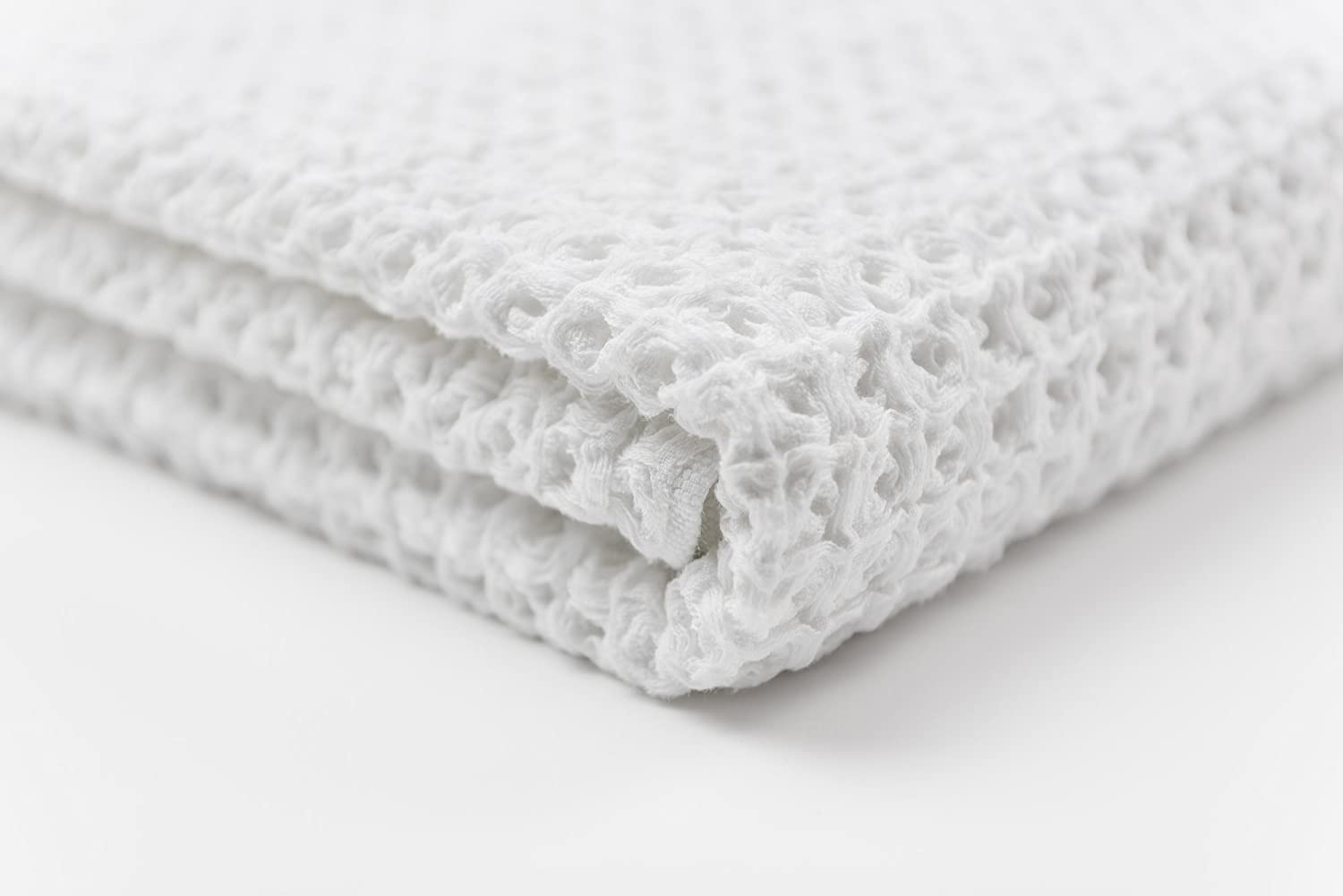
If you are like us, you hate towels that stink. But on the same hand, you can’t imagine spending $50 on a towel. Well, we bought the $50 Onsen Towel to try it out and give you our honest Onsen Towel Review. Is it worth it? Read on for our review.

Do you hate when you get out of the shower and use your towel and it stinks? Me, too. It's one of my biggest pet peeves. After using this towel for 4+ years, it's NEVER, EVER stank!
Quick Note: We bought the Onsen Bath Towel in October 2018, before we even started writing reviews. We noticed that we hadn’t written an Onsen Bath Towel review and decided we needed to fix that ASAP. We were not provided this towel for free to review, we actually bought this towel in hopes that it would get rid of the musty smell.
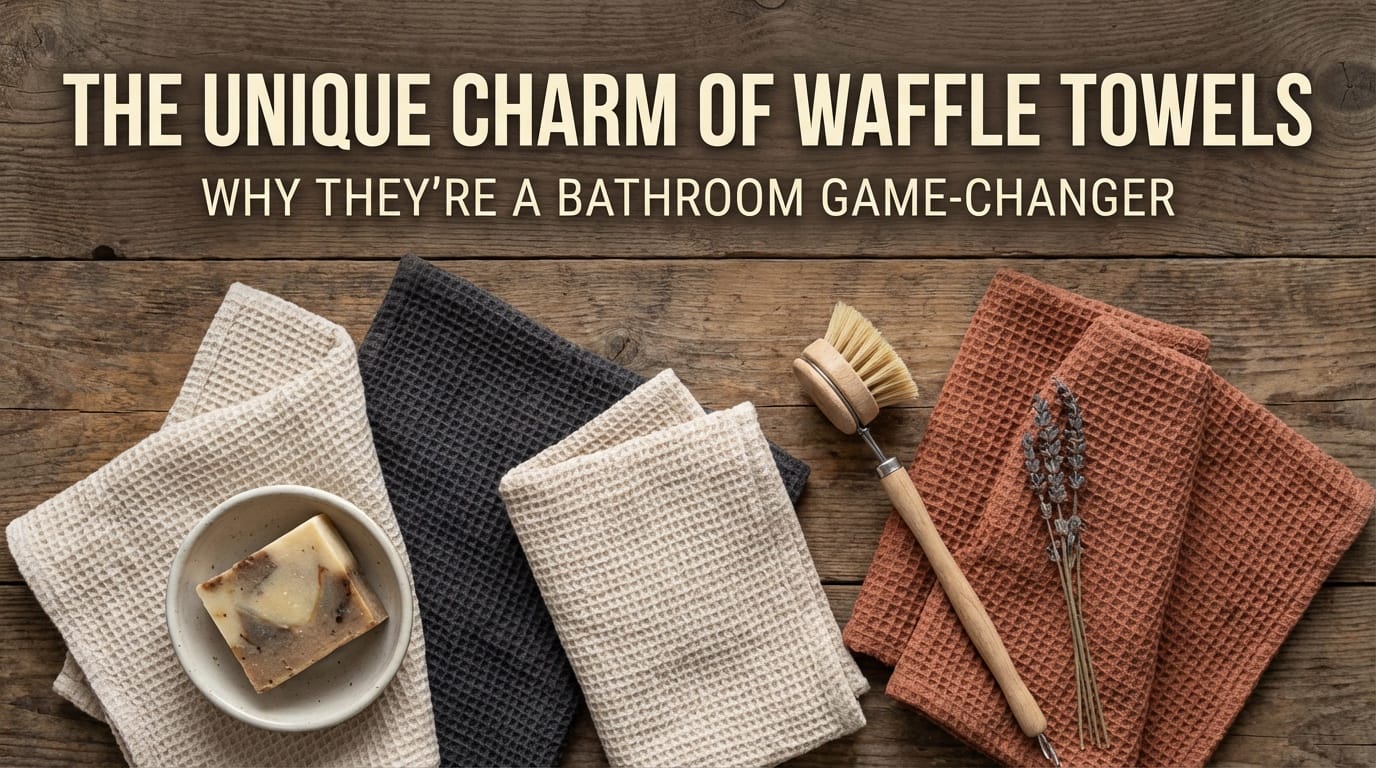
Onsen Towel Review: What is it?

Well, besides a $50 cotton bath towel, here’s what Onsen says about their towel (from their founder, Shane):
“I used to hate getting out of the shower and using a towel I didn’t like. I founded Onsen to make a towel that was stronger, softer, and dried faster than any other towel I’ve ever used. And now I can’t wait to reach for it every day after a shower (or bath). My terry towels weren’t doing their job anymore. When I reached for them after a shower they were either still wet, smelled musty, or a terrible combination of the two. Inspired by the lighter, thinner, quick-drying towels popular in Japan, I asked myself what the sole job of a towel was, and how I could improve it.”
Shane (Onsen Towel Founder)
In short, they are towels that are supposed to do a better job of drying themselves than other towels. They are supposed to not get as musty as easily.
History and Inspiration Behind Japanese Waffle Weave Towels
The waffle weave design has been a staple in Japanese bath culture for decades. It is renowned for its blend of functionality and minimalism.
Lightweight and quick-drying, these towels mirror traditional Japanese values of simplicity and efficiency. Their popularity grew as more people sought effective, space-saving solutions. This was inspired by the practical design seen in Japanese bathing habits.
The origin of waffle weave towels in Japan can be traced back to their bathhouses. Here, both efficiency and comfort are key.
Japanese bath towels, known as futa, emphasize high absorbency without sacrificing space. The lightweight design follows traditions, emphasizing fast drying while conserving fabric. The minimalistic design in Japanese homes greatly influences their bath towels’ function and style. Minimalism isn’t just an aesthetic choice but reflects a cultural value on efficiency, space, and functionality.

Waffle weave towels align perfectly with this ethos, offering a solution that blends function with style, showcasing a balance of utility and elegance. Emphasizing simplicity and efficiency, these designs represent an appreciation for quality over quantity, making each item in the space serve a distinct purpose.
The waffle weave’s practical elegance not only increases functionality but also complements the aesthetic of compact, curated spaces in Japanese homes, which often don’t favor excess.
Over time, the integration of Western influences saw the evolution of these towels. This allowed them to adapt to modern aesthetics and global tastes.
Japanese bath culture highlights relaxation and rejuvenation. Public bathhouses, or sento, and hot springs, known as onsen, emphasize simple elegance. This minimalism is echoed in the waffle weave towel, designed to dry quickly and fit well into small spaces, embodying the Japanese ethos of efficiency.
In Japan, bathing is both a ritual and an art form, rooted in centuries of tradition. The focus is not just on cleansing the body but also on mental and spiritual relaxation. Towels designed with the waffle weave pattern, inspired by this culture, encourage a soothing bathing experience. They complement the minimalist interiors of Japanese homes, where less is truly more, and each item serves a purpose beyond its surface value.
What we were looking for in our Onsen Towel Review
Even though we live in Colorado, where it is very dry, we would occasionally get the musty towel smell. Mr. We Tried It is super sensitive to smells (he can smell what chapstick someone is putting on 10 feet away) and he HATES the musty smell.

Even worse, if you just get out of the shower and you clean yourself with a musty towel, you smell musty and dirty. If you don’t have time to take another shower, then you go around all day smelling like that. That’s terrible!
In short: we were looking for a towel that would finally eliminate the musty smell if it wasn’t hung just right or didn’t fully dry from one use to another.
Stop reading this Onsen Towel Review before you understand this:
If you are looking for the world’s softest towel, this isn’t it. However, if you are looking for a towel that doesn’t smell musty, this might be the towel for you. Keep reading to learn more in our Onsen Towel Review.
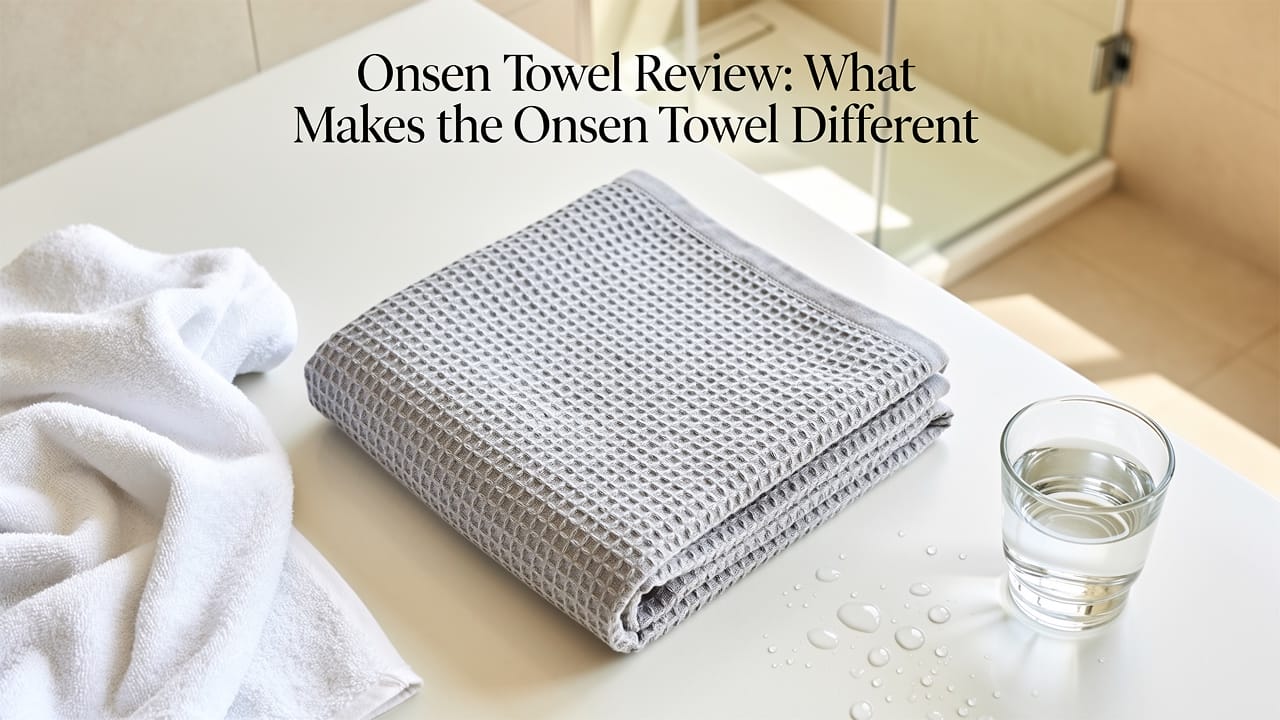
Onsen Towel Review: What makes the Onsen Towel Different
Before we embarked on this journey to give you the Onsen Towel Review, we had no idea there was anything different. We had no idea there were different ways to make a towel. We just thought you bought the softest ones you could touch at Target. But that’s not the case.
Onsen Towel says that their unique cotton waffle weave on the bath towel makes it super-lightweight but still absorbs water.
It’s just not AS soft as something like a terry towel.
A terry towel is softer (it’s also made from cotton), but it also takes a TON of time to dry. That’s what leads a terry towel to be mustier.
SUPIMA cotton, celebrated for its superior quality, originated in the early 20th century in the U.S. Only about 1% of the world’s cotton is SUPIMA, making it particularly sought after. Its extra-long fibers contribute to the towel’s durability and softness. This makes it ideal for luxury items like the Onsen Towel.
Originally cultivated in the American Southwest, SUPIMA cotton has become synonymous with high-end textiles. This cotton is prized for its sustainability practices and minimal environmental footprint. Farmers adhere to strict guidelines to ensure water conservation and pesticide reduction. This allows eco-conscious consumers to enjoy luxury without compromise. The choice of SUPIMA cotton in Onsen towels reflects a commitment to quality and environmental responsibility.
Farmers cultivating SUPIMA cotton follow sustainable practices to reduce environmental impact. These include precision agriculture techniques that use water more efficiently, minimizing waste. Together with reduced pesticide reliance, these methods support a healthier ecosystem and produce high-quality cotton.
The cultivation of SUPIMA cotton is closely linked to environmental care. Innovative methods like crop rotation and cover cropping keep soil nutrients intact, fostering sustainable agriculture. These strategies encourage natural biodiversity and decrease pesticide use, protecting both ecosystem integrity and product excellence.
Origin and Features of SUPIMA Cotton
SUPIMA cotton has a rich heritage, traceable back to the early 1900s. Grown in the U.S., its name is an abbreviation of “Superior Pima.” Recognized for having extra-long fibers, SUPIMA cotton is about 35% longer and 45% stronger than regular cotton.
This results in smoother and more durable textiles. It’s not just about strength; SUPIMA’s ability to absorb dyes better ensures vivid colors. Sustainability is a key feature too. SUPIMA farms adhere to environmentally responsible practices by monitoring water usage and minimizing chemical inputs. This makes it an eco-friendly choice for conscious consumers looking for high-quality textiles.
SUPIMA cotton’s heritage is significant, tracing back over a century in American agriculture. Its cultivation began in the southwestern U.S., where growing conditions are ideal due to the warm climate and long growing season.
The fibers harvested are renowned for their strength, enabling the production of high-quality textiles that are both soft and resilient. Furthermore, products made from SUPIMA cotton maintain their integrity over numerous washes, a clear sign of their enduring quality. Consumers around the world now recognize SUPIMA as a mark of excellence, synonymous with luxury and durability in cotton goods.
Comparison with Other Towel Materials
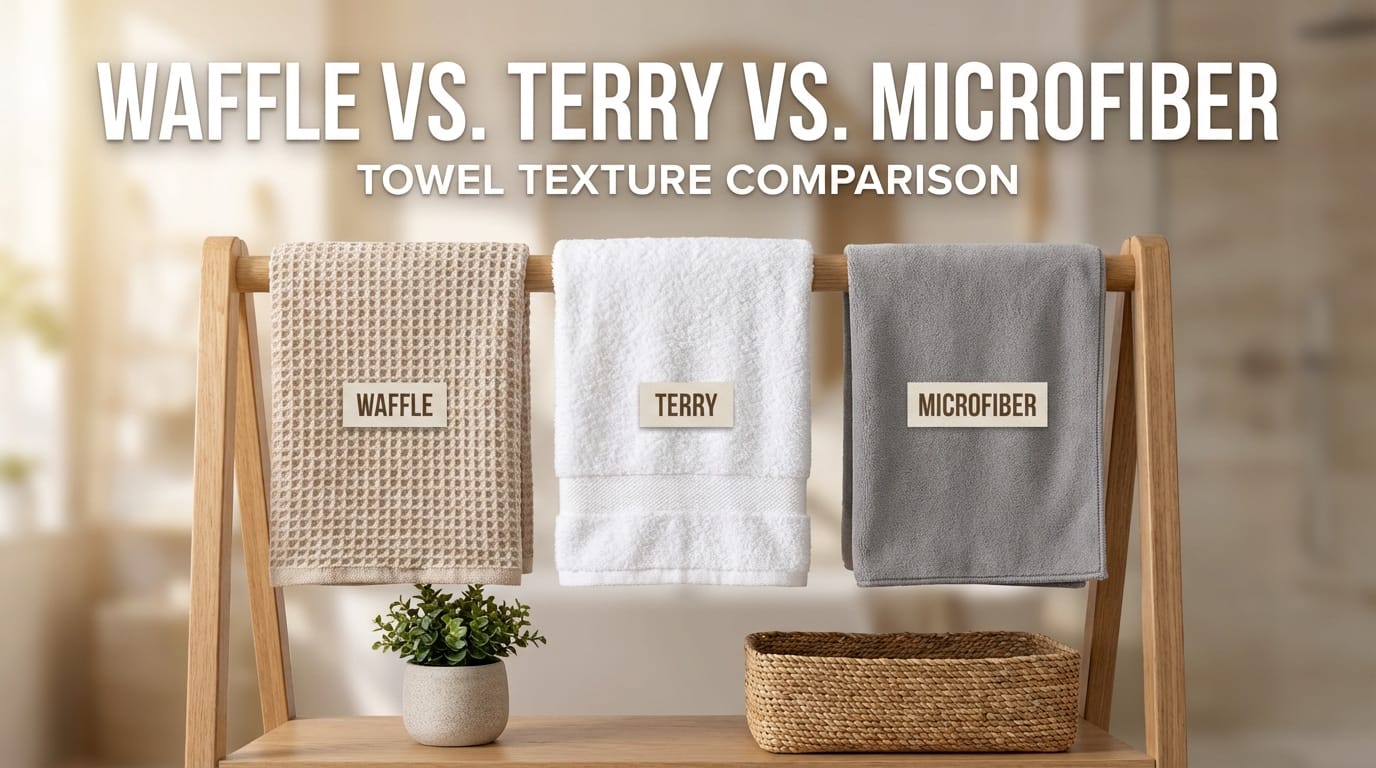
While waffle weave towels dry rapidly, terry towels are popular for their plushness and softness. However, terry cloth’s dense loops often trap moisture, leading to musty odors.
Microfiber towels, on the other hand, excel in absorbency and quick-drying but tend to lack the luxurious feel of cotton options. Each has its pros and cons. For those prioritizing fast drying and odor resistance, waffle weave stands out.
Comparison with Other Towel Materials
Linen towels, like waffle weave towels, are praised for quick-drying and durability. They offer a different texture compared to cotton, often rougher yet highly absorbent. Linen’s natural fibers soften over time with washing, providing a fresher feel.
While not as plush as some prefer, both linen and waffle weave towels excel in air circulation and moisture management, resulting in a fresh-smelling experience. Linen towels are durable, long-lasting, and known for hypoallergenic properties. Perfect for sensitive skin, linen’s fibers are breathable, preventing mold growth.
This feature mirrors the benefits of waffle weave towels, promoting quick drying and odor resistance. Both options cater to consumers seeking innovative fabrics for a healthier home.
Pros and Cons of Waffle Weave Towels
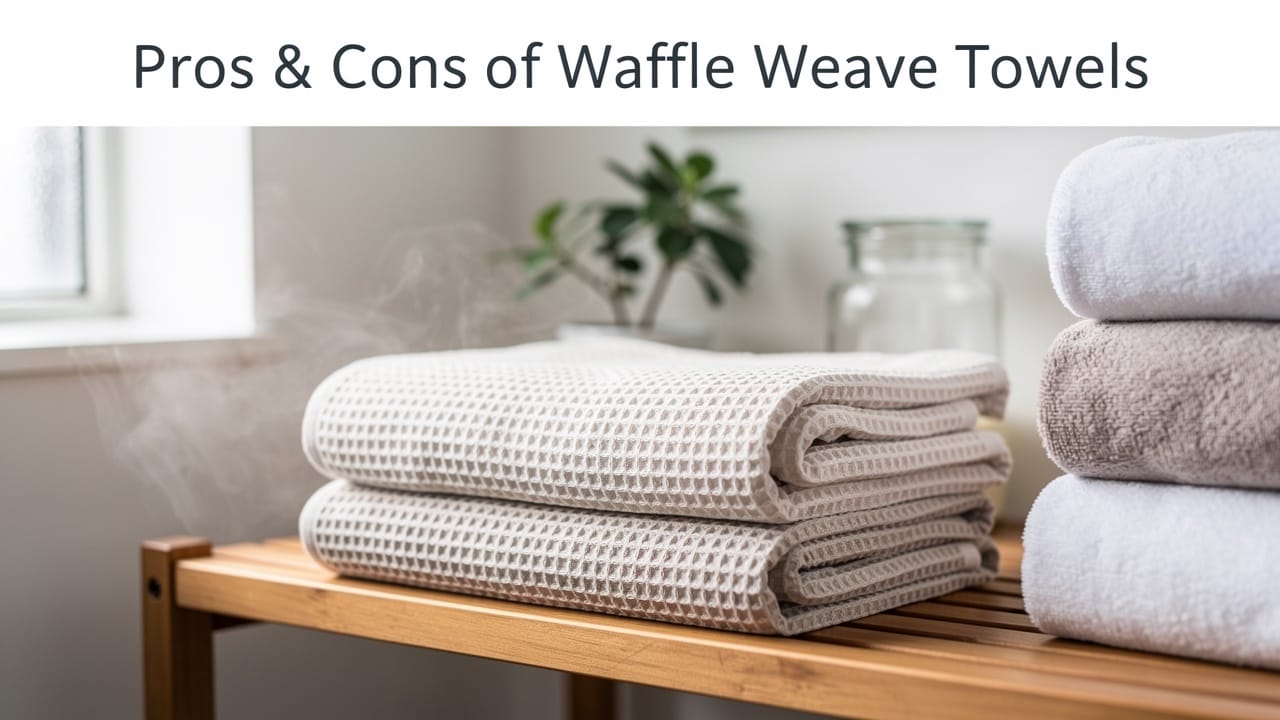
Waffle weave towels excel in quick drying and efficient moisture management. This feature helps them avoid lingering dampness that leads to odor. However, they might not feel as plush as terry towels, which some users find comforting. Their texture is a trade-off for their superior quick-dry ability, promoting a cleaner feel after each use.
While waffle weave towels are less plush, they offer a rejuvenating feel that enhances circulation and skin stimulation. Their design also resists the wear and tear traditional towels might face, such as fraying edges and loss of absorbency over time. This durability often results in longer-lasting products, reducing the need for frequent replacements and contributing to a more sustainable lifestyle.
Detailed Benefits of Waffle Weave Design
The waffle weave design of Onsen towels is more than just a functional choice. Its unique structure increases the surface area, allowing for rapid evaporation and a swift drying process. This means that even in humid conditions, the towel doesn’t harbor moisture for long, reducing the chance of a musty smell.
Moreover, the design enhances fabric strength, offering resistance against wear and tear. Unlike tighter weaves, waffle weave fabrics maintain breathability while still absorbing water efficiently.
This balance creates a fabric both lightweight and durable, ideal for everyday use and travel. The waffle weave pattern is also key in moisture management. It enables efficient air circulation within the fabric, promoting quick water evaporation.
This capacity not only keeps towels fresh but also makes them ideal for continuous use in environments like gyms or spas. The structure’s compact drying efficiency is complemented by its minimalistic elegance, introducing a touch of simplicity and sophistication to any bathroom decor.
The lightweight nature of this weave also aids in compact storage, making waffle weave towels a preferred choice for travelers and those with limited space.
Is it really absorbent?

It is SUPER absorbent. I know it’s hard to think this waffle weave design could work, but it does.
I would say that it’s even more absorbent than a terry towel.
What is the Onsen Bath Towel made from?
This is really, super easy: 100% SUPIMA COTTON
Onsen bath towels are made entirely from extra-long-staple Supima cotton, which is among the softest and finest in the world.
SUPIMA cotton sets itself apart with extra-long fibers, resulting in stronger and smoother threads. This type of cotton is grown in the United States and is known for its durability and resistance to pilling.
It offers a softer feel compared to standard cotton, enhancing the towel experience while maintaining long-lasting quality.
Do you hate when you get out of the shower and use your towel and it stinks? Me, too. It's one of my biggest pet peeves. After using this towel for 4+ years, it's NEVER, EVER stank!
Yes, the Onsen Towel is very lightweight. Even on their website, Onsen says that you can see through the “airy weave if you hold it up to the light.”
Related Reviews You Might Like
If you enjoyed this review, check out some of our other popular reviews:

Hello! I want to get the white onsen towels but I was wondering if the hand towels stay bright white especially with all the traffic hand towels get in these pandemic times with avid hand washing. I saw you said you only used bleach a couple time on accident. Do you use oxiclean? How do you keep them bright white? Thanks!
I just checked with my wife and she still uses bleach and Dawn dish soap to keep all the whites white – even our onsen towels. I know they don’t recommend it, but we’ve had them for several years without a problem at all. Hope that helps!
This is so helpful! Thank ou!